
Building a Community That Cares: Good Samaritan Awards $542,600 for Affordable Housing in Evansville
After closing its facilities in 2023, Good Samaritan is writing a new chapter—one focused on affordable housing and community care.
When Good Samaritan Home closed its doors following the sale of its facilities in 2023, many wondered what would happen to an institution that had served seniors in the Evansville area for nearly seventy years.
Last week, community leaders, nonprofit partners, and housing advocates gathered to see the answer.
The Good Samaritan Foundation awarded $542,600 in grants to six nonprofit organizations working to expand affordable housing opportunities across Evansville and the surrounding region. The funding marks the first round of a five-year, $5 million commitment aimed at addressing housing affordability, housing stability, mental health access, and senior care needs identified by community stakeholders.
For Rev. Michael Erwin, executive director of Good Samaritan, the announcement represented more than a grant cycle. It represented the continuation of a mission.
“A few years ago, if someone had asked what Good Samaritan Home was, most people would have pointed to a building,” Erwin told attendees. “But Good Samaritan was never really about a building. It was always about building a community that cares.”
The transition began after Good Samaritan leaders and member United Church of Christ congregations evaluated how the organization could continue serving the community after the closure of the nursing home. Through meetings with community stakeholders, three major unmet needs emerged: affordable housing, access to mental health services, and senior care.
Affordable housing quickly surfaced as one of the region’s most urgent challenges.
The demand was evident during the foundation’s first grant cycle. Good Samaritan received nearly $13 million in funding requests while planning to award approximately $500,000.
“The need is significant,” Erwin said. “But it also tells us something else: there is an incredible network of organizations and people willing to step forward and meet that need.”
The six grant recipients will use the funding to create or preserve 66 affordable housing units while providing supportive services designed to help residents remain successfully housed. Projects range from the rehabilitation of rental units and construction of new homes to housing navigation services for survivors of domestic violence and upgrades to apartments serving individuals transitioning out of homelessness.

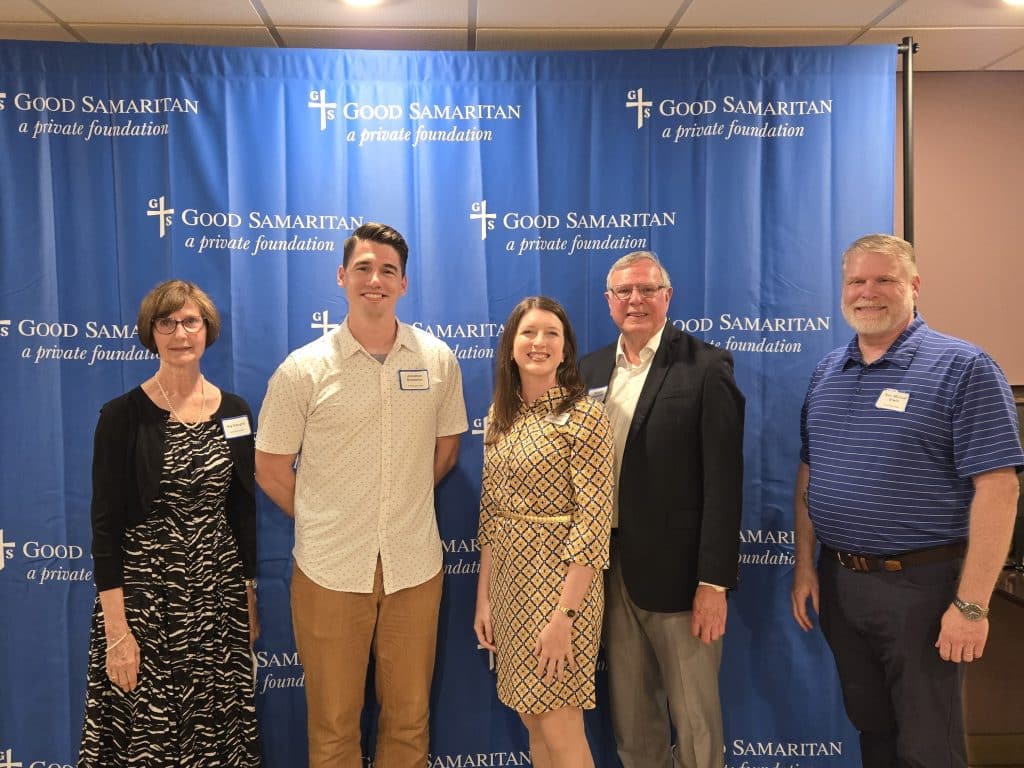
Among the recipients were HOPE of Evansville, which received $200,000 to acquire and renovate a 40-unit apartment building on Covert Avenue; Community One, which received $100,000 to construct and rehabilitate homes in the Tepe Park neighborhood; Memorial Community Development Corporation, which received $90,000 to support homeownership opportunities and neighborhood stabilization efforts; ECHO Housing, which received $80,000 for repairs and upgrades to affordable rental homes; United Caring Services, which received $57,600 for apartment improvements serving formerly homeless residents; and Albion Bacon Fellows Center, which received $15,000 to strengthen housing support services for survivors of violence.
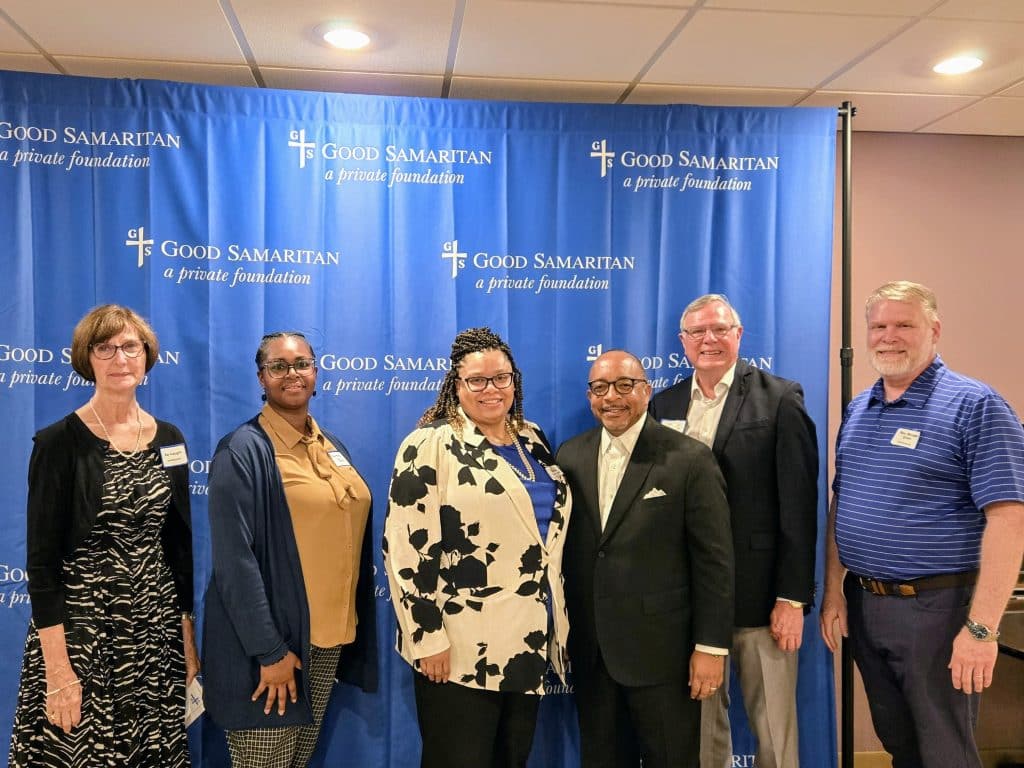
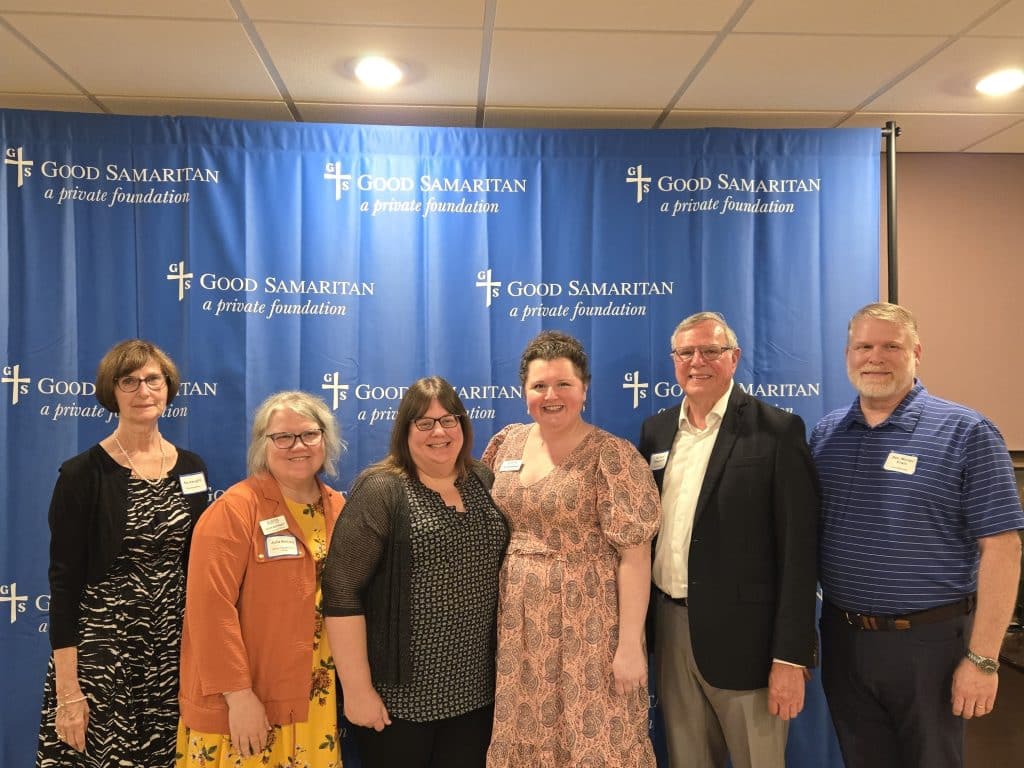
Mayor Stephanie Terry, the event’s keynote speaker, said housing remains one of the city’s top priorities.
“Housing is at the core of any growing city,” Terry said. “It impacts workforce growth, neighborhood stability, economic development, and overall quality of life.”
Terry noted that the city established a goal of having 2,000 housing units underway by the end of 2027. According to the mayor, Evansville currently has 880 units under development and another 346 units in the pipeline, placing the city at approximately 61 percent of its target. She also highlighted more than $10 million in local incentives invested in housing development during the past year.
For grant manager Liz Tharp, helping launch the housing initiative has been personally rewarding. Drawing on her background in philanthropy and foundation management, Tharp worked with the volunteer housing committee to build the systems, application process, and infrastructure needed to turn the board’s vision into reality.
“It started from just an idea, from a desire to make a change,” Tharp said. “Being able to help shape that and turn it into the reality that we see today has been amazing.”
The foundation plans to continue investing in affordable housing through two grant cycles each year. The next Affordable Housing Grant Cycle opens July 1, with another $500,000 anticipated for distribution.
As the event concluded, Erwin reflected on what the day represented. “The walls came down,” he said. “But the mission did not.”
Judging by the demand for funding and the number of organizations working to address housing needs across the region, the work of building a community that cares is far from finished.


Author

Related Articles

Remembering Claudia Ann Matthews
Claudia Matthews spent her life showing up for family, friends, customers, churches and the community. Our Times remembers a beloved member of our newsroom family whose legacy was built on faith, service, dependability and the relationships she nurtured throughout her life.

Ted McCreary Honored with Legacy Award at SIMA Gala
When Ted McCreary saw young people outside late at night, he didn’t simply complain—he asked, “What can we do?” That question helped launch the Southern Indiana Mentoring Academy. Seven years later, McCreary was honored with SIMA’s Legacy Award for his commitment to mentorship and Evansville youth.

Evansville Cultural Experience brings back Family Day
What began as a neighborhood barbecue during the pandemic has grown into one of Evansville’s largest community celebrations. Now, Evansville Cultural Experience founders Philip Baker and Sharnetta Sharp are preparing to revive Family Day in the Park—and they want the entire community involved.