
Rotary Club honors Sondra Matthews with Civic Award
Sondra Matthews has spent decades telling Evansville’s stories, preserving Black history, mentoring leaders, and building institutions that continue to shape the community. Now, the Rotary Club of Evansville has honored her with its 2026 Civic Award—recognizing a legacy rooted in faith, service, and generations of impact.
Described as a pioneer, visionary, advocate, mentor, supporter, and friend, Sondra Matthews was recognized July 7 as the Rotary Club of Evansville’s Civic Award recipient. Her love for people and unwavering commitment to the community have empowered generations of leaders, strengthened neighborhoods, and left an enduring legacy of service, pride, unity, and excellence.
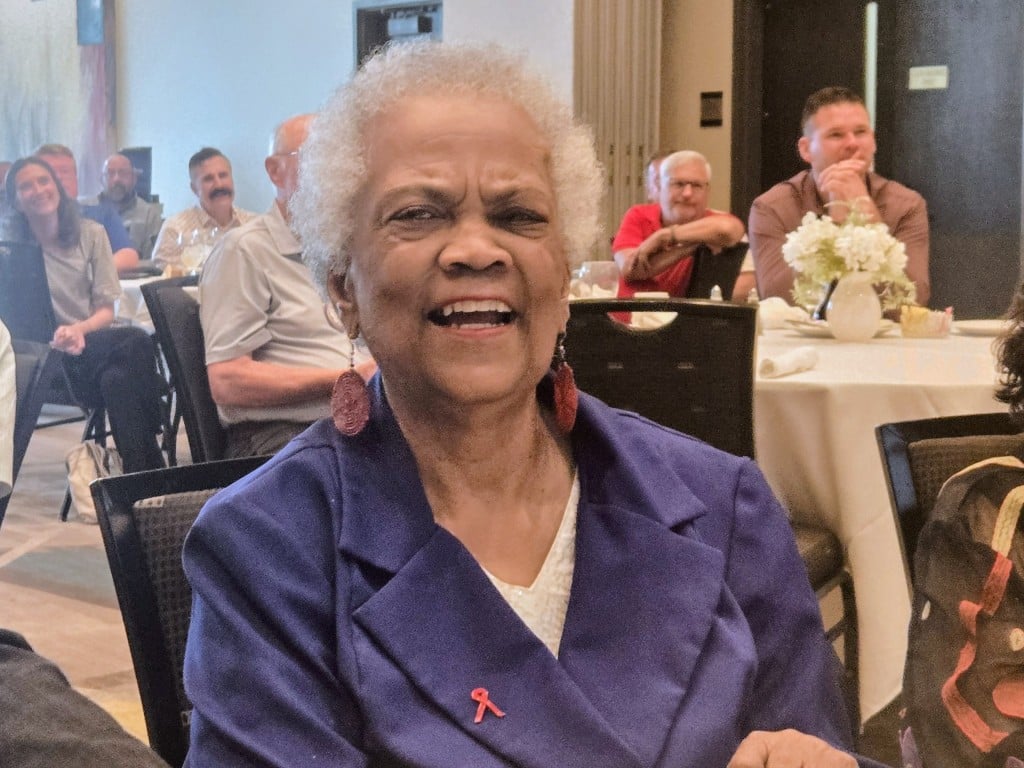
Presented since 1927, the Rotary Civic Award is one of Evansville’s oldest and most prestigious civic honors. Guided by Rotary’s motto, Service Above Self, the award recognizes individuals whose outstanding contributions have strengthened the community through either a defining achievement or a lifetime of service.
For Matthews, however, the afternoon was less about celebrating her own accomplishments than honoring the women whose leadership paved the way before her.
Before accepting the award, Matthews delivered a presentation tracing the history of Black women in leadership in Evansville. While centered on politics, her remarks painted a broader picture of resilience, faith, mentorship, and determination in the face of barriers that often questioned whether Black people-especially women- belonged in positions of influence.
She began with Sallie Stewart, who organized the Indiana Federation of Colored Women and established Evansville’s Phyllis Wheatley Club, creating educational opportunities for Black girls during a time when educational opportunities for African Americans were limited. She spoke of Estella Moss; the first Black woman elected to a countywide office as Vanderburgh County Recorder.
Matthews continued by recognizing former Evansville City Councilmember and President Connie Robinson Blair, whose 24 years on council made her the longest serving council member in Evansville history, along with Jacqueline Hall LaGrone and Diane Clement Boyde, who led the Evansville-Vanderburgh County Human Relations Commission. She also mentioned educator Sheila Huff Jackson, who broke barriers as a high school principal at Bosse, and Evansville Mayor Stephanie Terry, the city’s first African American mayor.
All the women endured and led despite the obstacles and barriers. Throughout her remarks, Matthews reinforced the critical role of faith and the pastors who encouraged and supported these women. “Our journey has been backed by our pastors,” Matthews said.
Although she never included herself among those trailblazers, those who took the stage afterward made it clear they considered her part of that same legacy.

“If it wasn’t for Sondra Matthews, we would not have an African American mayor,” said Aretha Graves. “Sondra ran so Stephanie could walk…or walk so Stephanie could run,” she added.
Mayor Stephanie Terry reflected on Matthews’ decades of leadership through journalism, recalling the newspaper founder’s commitment to telling stories that mattered.
Matthews founded Our Times newspaper in 1983 and led the publication for nearly four decades before selling it to the Adrian M. Brooks Sr. Foundation in 2022. During a video tribute, Our Times Editor in Chief Rasheedah Ajibade highlighted Matthews’ hands-on approach to every aspect of producing the newspaper.
“Sondra reported stories, edited, and prepared each newspaper for mailing to ensure every subscriber received their edition. That is the level of care she put into this newspaper,” Ajibade said.
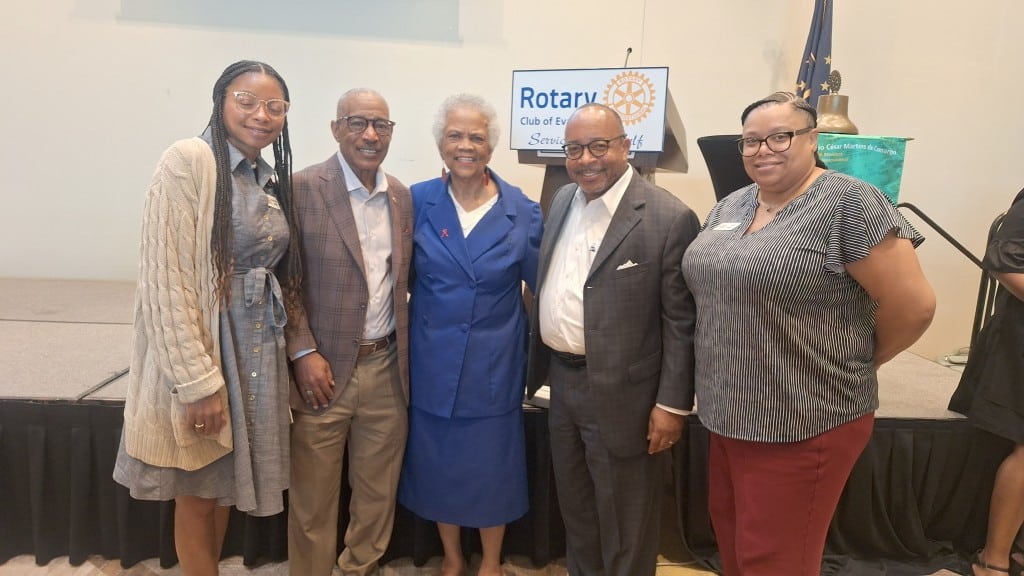
Terry also spoke about Matthews’ willingness to mentor others, saying she still receives emails offering advice and encouragement. “She never bites her tongue,” she said with a smile. “But she does it in such a caring way that you know it’s coming from a good place.”
Others pointed to Matthews’ role in preserving Evansville’s Black history and culture.
Kori Miller credited her vision for helping establish the Evansville African American Museum after she proposed preserving one of the Lincoln Gardens buildings instead of allowing it to disappear. Her founding of the Soul Writers Guild, which continues to organize Kwanzaa celebrations, literary events and the Dr. John Caldwell Lecture Series, was also highlighted.
Matthews’ vision extended beyond the work of a single lifetime. By founding institutions like Our Times and the Evansville African American Museum, she helped create lasting community assets that continue to educate, preserve history, and create opportunities for future generations.
When Matthews finally took the podium to accept the award, she spoke not about her accomplishments, but about the people and faith that guided her life.
“God has been good to me all my life,” she said.
She reflected on losing her father at age 15 and being raised by a mother whose faith carried their family through hardship. Matthews credited her mother with raising three daughters who all graduated from college, refusing to let limited opportunities define their future.
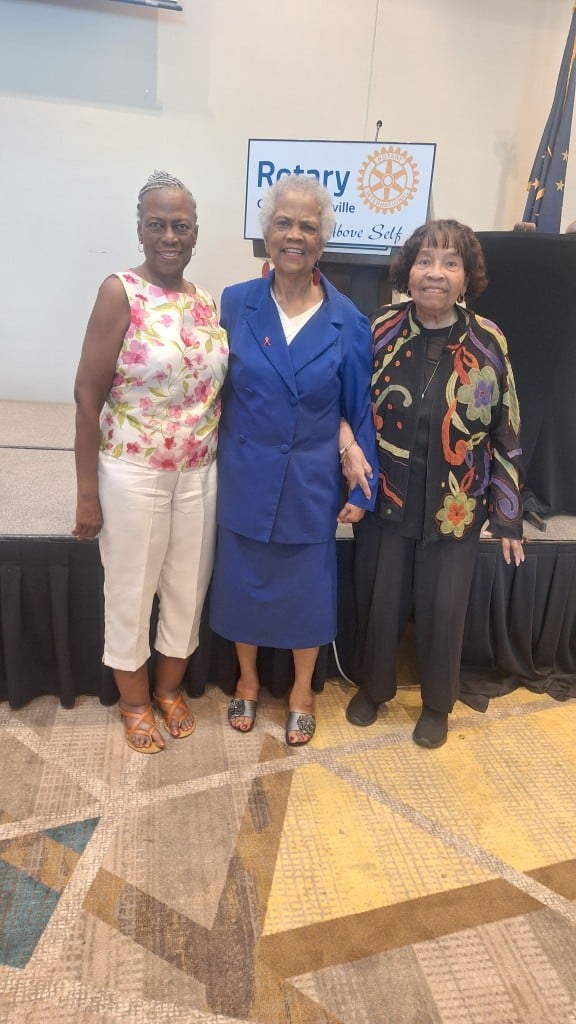
That was the same spirit of faith, resilience, and determination that echoed throughout her remarks when she honored generations of Black women who broke barriers, opened doors, and created opportunities for those who followed.
By the end of the afternoon, it was evident that Matthews had earned her place among those women. Through journalism, historic preservation, literature, civic engagement, and mentorship, she has spent decades documenting her community while investing in its future. Her legacy is measured not only by the institutions she founded or the recognition she received, but by the generations of leaders she empowered and the opportunities she created for others.
Author

Related Articles

More Than Remembrance: Evansville Honors the Life and Legacy of Dr. King
The community honored the life and legacy of Dr. King through various celebrations across the city of Evansville.
Indiana Senate Rejects Redistricting Plan After Intense Debate
Indiana Senate rejects redistricting plan.
Community Still Seeking Answers After Fatal Police Shooting of Everett Nunn
Two weeks after the fatal police shooting of Everett M. Nunn, Evansville residents continue to push for clarity, accountability, and an investigation that extends beyond local oversight alone.