
“Get your power out of your pocket”: Barber calls Evansville to action
“Get your power out of your pocket.” The Rev. Dr. William J. Barber II brought that urgent challenge to Evansville—calling residents to vote, organize and turn faith into action. Read how his message energized the Human Rights Dinner and honored the people advancing dignity and belonging across the city.
Civil rights leader urges greater civic participation as Mayor Terry honors nine human rights champions
EVANSVILLE, Ind. — The Rev. Dr. William J. Barber II challenged an Evansville audience to turn faith, hope and frustration into action, warning that communities surrender their influence when people fail to exercise the power they already possess.
“Get your power out of your pocket,” Barber declared during his keynote address at the city’s Annual Human Rights Dinner and Mayor’s Celebration of Human Rights Awards on Friday, Oct. 2, at the Old National Events Plaza. About 150 people attended the event, where Mayor Stephanie Terry recognized nine individuals and organizations for their contributions to human rights and belonging in Evansville.
Barber, a nationally recognized pastor and civil rights organizer, drew on the biblical story of David and Goliath, the 1963 March on Washington and the history of the civil rights movement to emphasize the power of ordinary people working together. “The world needs your power, your moral power, your conscience right now,” he told the audience.

The Power of Participation
Central to Barber’s message was the importance of voting, particularly among people who feel their voices carry little influence in government.
In a follow-up interview with Our Times Newspaper, Barber pointed to low voter participation across racial and economic lines as a major obstacle to meaningful change. He argued that when large numbers of eligible voters stay home, a comparatively small portion of the electorate can determine who holds office and which policies shape the lives of the broader population.
For Barber, that makes voter participation more than a personal choice. It is a way for communities to exercise influence over decisions affecting wages, health care, education and other everyday concerns. He also challenged residents to move beyond frustration with political outcomes and consider how greater participation might change them. “It’s time to stop complaining and start organizing,” Barber said during his address.
In the interview, Barber said residents must continue pressing elected officials to act on the issues that brought them into office. He urged voters to ask candidates not only what they oppose, but what they intend to accomplish. Voting, he explained, is the beginning of civic engagement, not its conclusion.
From Criticism to Vision
Throughout his keynote address, Barber urged the audience to confront injustice without losing sight of the kind of society they hope to build. “At some point you have to move from critique to vision,” he said. Barber emphasized the importance of local organizing and coalitions that bring together people across racial, religious and economic differences.
When asked why Black communities continue to experience disparities despite generations of advocacy, Barber said progress requires vigilance because gains can be reversed when people disengage. He encouraged communities to organize around a clear agenda addressing education, health care, wages and other issues, rather than relying on marches or elections alone.
His belief is that lasting change requires both a vision for the future and a willingness to act. “Hope is born when people are willing to suffer underneath something to change it and make it better,” he said.
Faith, Justice and Moral Courage
Barber framed his message as a moral call that extends beyond political affiliation. “It’s not about left versus right or liberal versus conservative. It’s about right versus wrong,” he said.
He also cautioned that those challenging injustice must not adopt the conduct they oppose. “You don’t want to become an authoritarian to fight an authoritarian. You don’t want to become a liar to fight a liar.”
Faith was woven throughout his remarks, but Barber stressed that belief must lead to action. “There comes a time that your theology, your philosophy must take on legs. There comes a time that your prayer must become a march,” he said. “Faith without works is dead, but faith with works is powerful.”
Helping Young People See Their Power
The challenge of encouraging participation extends to younger generations.
During the interview, Our Times asked Barber about young people in the newspaper’s youth media program who remain skeptical that voting can make a difference, even as they learn about civic issues and the history of civil rights.
Barber said the answer is not simply to tell young people to vote, but to help them understand how government decisions affect the issues they care about. He pointed to policing, wages and access to education as examples of concerns shaped by elected officials and public policy.
By connecting those issues to the responsibilities of specific offices, Barber said, young people can begin to see how civic participation relates to their own lives. He also acknowledged that elected officials have a responsibility to follow through on their promises. When they fail to act, he said, they reinforce the belief that participation accomplishes little.
Honoring Evansville’s Human Rights Champions

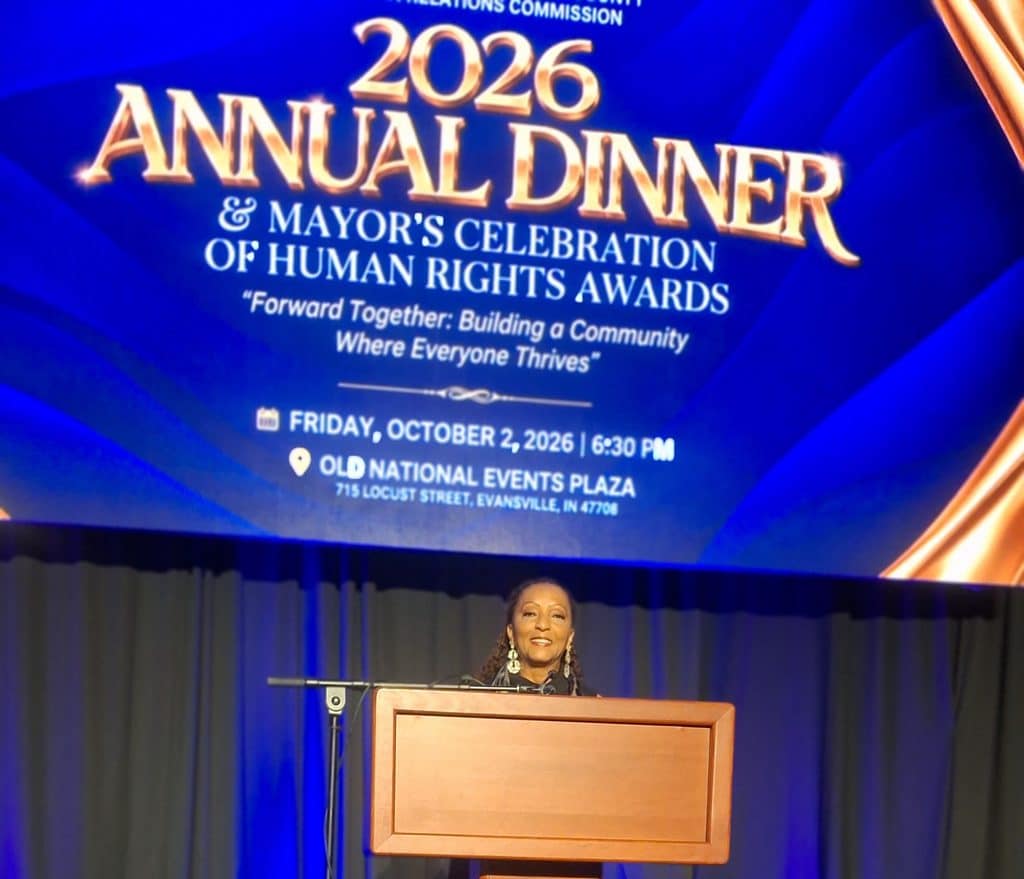
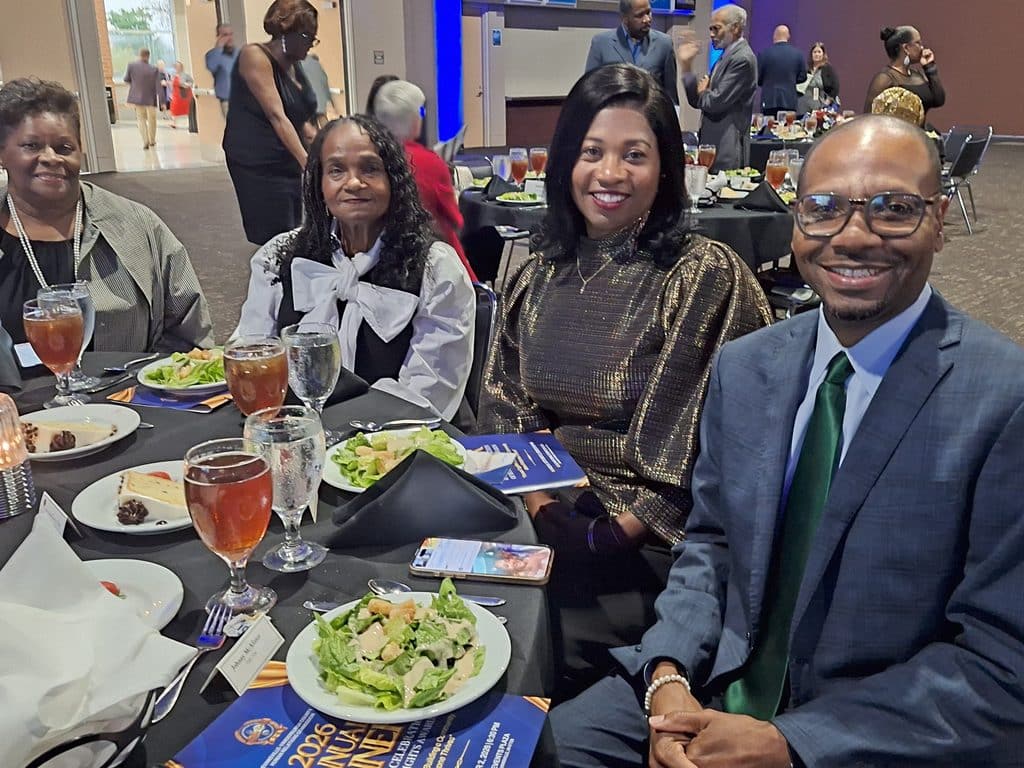
The evening also recognized individuals and organizations working to advance dignity, opportunity and belonging in Evansville. Mayor Stephanie Terry presented the 2026 Mayor’s Celebration of Human Rights Awards to nine recipients.
Dr. Shaukat Iftikhar and the late Marie Doris Jean Finch received the Sadelle Berger Award. Dr. Arcea Zapata de Aston received the Willie Effie Thomas Development Award.
Leadership Awards went to the Volunteer Lawyer Program of Southwestern Indiana and Jodi Ferrell, while the University of Evansville African American Alumni Association received the Sue Woodson Community Relations Award.
Sally Olson received the Community Champion Award, the Southwest Indiana Association of Realtors received the Housing Champion Award, and AstraZeneca received the Workforce Belonging Award.
The annual dinner was organized by the Evansville-Vanderburgh County Human Relations Commission.
A Call to Act
Barber’s message inspired several local groups to join his “1,000 Marches to the Polls” drive, which is mobilizing voters across the country to organize nonviolent and nonpartisan marches to the polls on the first day of early voting and beyond!
For Barber, the march represents one way communities can begin putting their collective power into action. “What we cannot let happen in this moment is that the people before us did more with less, and we not do more with more,” he told the dinner audience.
His challenge was for residents to carry the evening’s message beyond the event. “Get your power out of your pocket.”
Authors

Related Articles
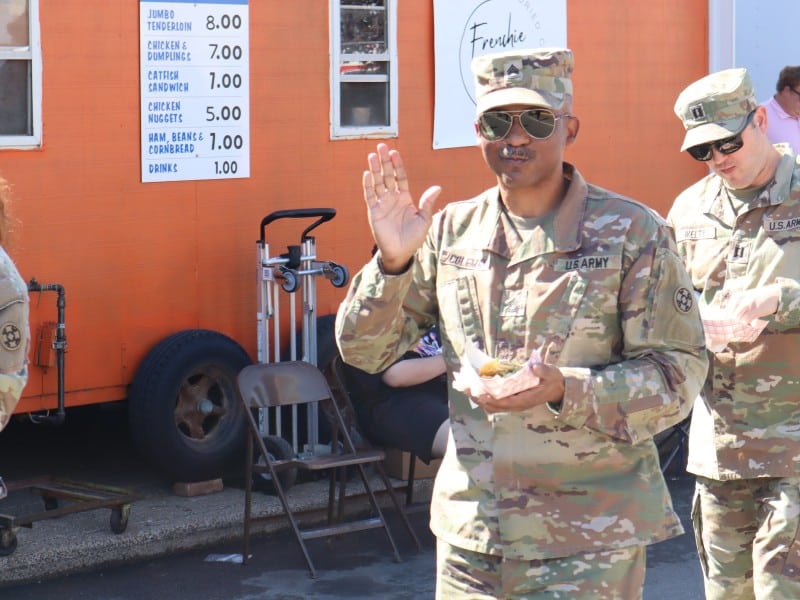
2026 Fall Festival Slideshow
Check out these photos from the 2026 Fall Fest! If you see someone you know, share with them!

Cultural food vendors bring tradition and community to 2026 Fall Festival
The West Side Nut Club Fall Festival’s cultural food booths are hidden gems, offering a taste of tradition and community and stories that extend far beyond the plate.

Serving the community, one slice at a time
In remembrance of his mother Beverly, Travis Owsley feeds the Baptisttown community in Owensboro, KY.