
HOPE of Evansville takes on The Phoenix
HOPE of Evansville is taking on The Phoenix, a longtime troubled housing complex on Covert Avenue, with plans to restore the property and bring new investment to the neighborhood.
A few weeks ago, Evansville City Council member Rita Taylor shared photos highlighting deteriorating conditions at a housing complex on Covert Avenue. Known to many residents as Raintree and now called The Phoenix, the property has changed ownership several times.
For years, the complex has faced persistent problems, including illegal dumping and deteriorating property conditions. At the same time those concerns were being raised publicly, a change was already underway at the property. HOPE of Evansville, a local nonprofit housing organization, had been working to acquire the complex and recently completed the $3.35 million purchase.
HOPE’s interest in the property began last year after a conversation with the owner, who was renovating The Phoenix at the time. That conversation eventually led the organization to consider purchasing the property as part of a broader strategy to expand its portfolio of affordable rental housing.
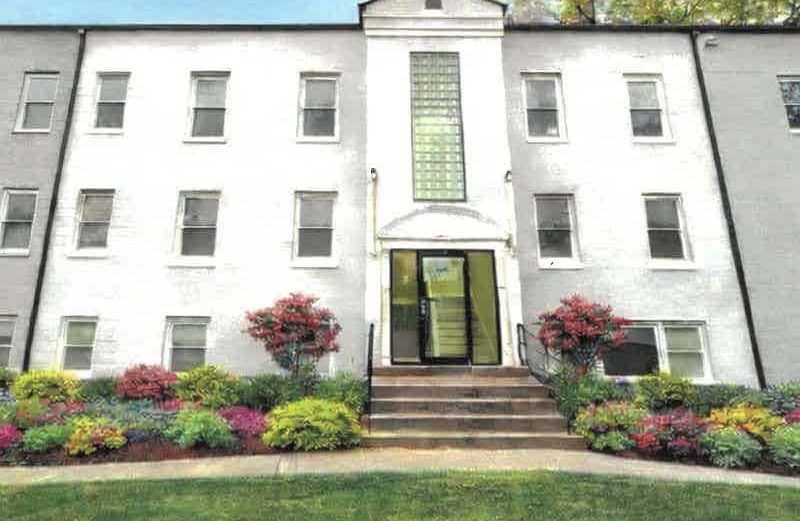
The move represents a shift for HOPE, which has traditionally focused much of its work on helping low- to moderate-income families achieve housing stability and homeownership through housing counseling, financial education, credit coaching and affordable housing development. Adding rental properties to its portfolio gives the organization another way to address local housing needs while generating revenue to support its work.
“In the present administration, we’ve seen a lot of funding cuts,” said Joshua Calhoun, executive director of HOPE of Evansville. “Owning properties allows us to diversify our revenue so that we can continue our mission-focused work.”
The Phoenix includes 12 one-bedroom and 26 two-bedroom units. Several partners helped finance the acquisition. HOPE received $386,000 in HOME funds from the City of Evansville, $250,000 from the Affordable Housing Trust Fund and $200,000 through a Good Samaritan grant. The organization is also working to coordinate volunteers to help clean up the property.
The development comes at a time when Evansville is facing a shortage of housing across income levels, with some of the greatest need among lower-income renters. Evansville’s 2025 Housing Needs Assessment estimates the city needs nearly 3,000 additional rental units over the next five years, with much of the need among lower-income households. The report also points to the need to preserve and improve the city’s aging affordable housing stock. That is part of the challenge HOPE is taking on at The Phoenix.
Although portions of the complex had already been renovated, Calhoun said the work did not meet HOPE’s standards. “Pastor Brooks always said he wouldn’t build anything he wouldn’t live in himself with his family,” Calhoun said. “That is a great model, and one that we’ve adopted at HOPE.” Over the next six months, HOPE plans to continue renovations while gradually moving tenants into units as they become available.
Addressing Longstanding Problems
HOPE is also inheriting some of the challenges that have plagued the property under previous ownership, including illegal dumping. The organization plans to install security cameras to help address the problem. “In the five days that we’ve owned the property, we’ve had one person dump three loads in one of the dumpsters,” Calhoun said. “There is definitely a lack of pride for those that currently live in the area,” he added. “Which is a much deeper issue for our community at large.” The problems at The Phoenix reflect a larger challenge facing some Evansville neighborhoods.
According to Evansville’s 2025 Housing Needs Assessment, more than 1,000 residential structures were identified as showing signs of blight, with the highest concentrations in the Central and Near East areas of the city. Along with improving the physical condition of The Phoenix, HOPE is taking on another challenge: changing the reputation the complex has developed over the years. “I want the community to give us a fair shot,” Calhoun said. “We want the community to be patient as we make the necessary improvements.” That work may take time.
Affordable housing development can be more complex than traditional market-rate development. Grant restrictions, federal guidelines, bidding requirements and other regulations can affect how quickly projects move forward. At the same time, nonprofit developers must balance the cost of renovations with the goal of keeping rent affordable.
“Because we are not in this to make money and have quality standards, renovations can be slow,” said Chioka Roach, property management director for HOPE. “Keeping the units affordable is essential, so that also impacts our timeline.”
The pressure to maintain affordability is significant. The housing assessment found that lower-income renters already have limited options in Evansville. Among non-apartment rentals such as houses and duplexes, researchers found only 23 available units out of a citywide inventory of 12,819 when they surveyed the market between November 2024 and January 2025. The median rent for an available two-bedroom unit was $1,089 — up nearly 57% from $695 in 2020.
For HOPE, however, the work at The Phoenix is about more than adding 38 affordable units to Evansville’s housing stock. It is also about what improving one property can mean for the people who live there and the neighborhood around it.
“Beautifying this property will help the residents see progress, momentum, excitement and hope that things can be better,” Calhoun said. “When people feel good about where they live, it’s contagious.”
For Calhoun, the condition of a person’s home and neighborhood can shape much more than its appearance. “When you live in a neighborhood with dilapidated housing, you don’t have that feeling of safety,” Calhoun said. “We want to be part of the restoration.”
Author

Related Articles

Habitat partnership connects housing with better health through fourth Evansville home
A new Habitat for Humanity of Evansville home is linking affordable housing with better health. The fourth Building Homes and Health project brings together Deaconess Health System, local universities and student volunteers to show how safe, stable housing can shape family well-being across the community.

More Than a Grant: Congregations with Community Builds Partnerships Across Indiana
Across Indiana, congregations and community organizations are joining forces to tackle housing, homelessness, employment, literacy and more. Discover how Congregations with Community has invested more than $3.2 million in partnerships—and why its leaders say relationships, not grants, are the real catalyst for lasting change.

Upcoming Community Events and Opportunities: Sept. 7-Sept. 14
From holiday service changes and a chance to weigh in on regional transportation plans to a neighborhood cleanup and a spooky art call, here’s what’s happening in Evansville and the surrounding area Sept. 7-14.