
More Than a Burger: A Community Legacy Lives On
A beloved Fall Festival food tradition is getting a new chapter. As Grace and Peace Lutheran Church prepares to close, its popular donut burger food truck has been donated to the Evansville African American Museum — giving the museum a new way to raise funds while keeping a community favorite alive.
As Grace and Peace Lutheran Church prepare to close, its popular donut burger and food truck are finding a new home with the Evansville African American Museum.
Not every day do you get to eat a donut and a burger at the same time. A glazed donut, lightly toasted. A hamburger patty tucked inside. Melted cheese bringing the sweet-and-savory combination together.
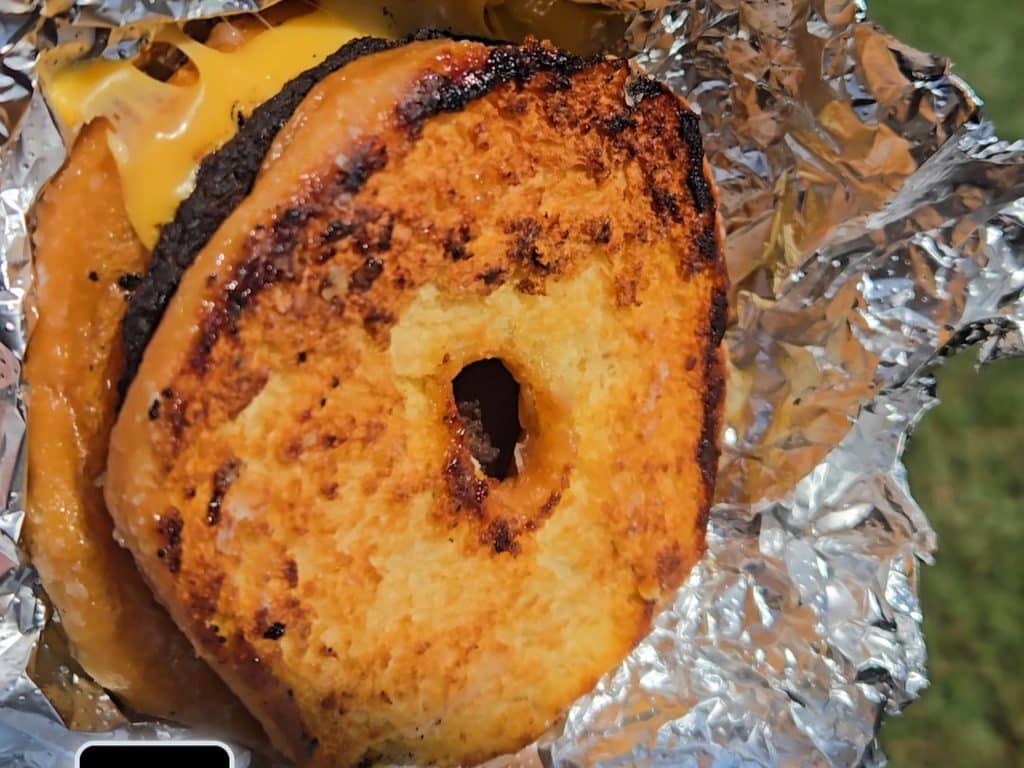
For years, the donut burger has been a familiar favorite at the West Side Nut Club Fall Festival. This October, after an absence in 2025, it is returning—but behind the grill will be a new organization carrying on the tradition: the Evansville African American Museum.
“We are so grateful for this opportunity given to us by Grace and Peace Church,” said Kori Miller, executive director of the museum.
Grace and Peace Lutheran Church donated the food truck to EAAM as the congregation prepares to end its life as a church. Along with the truck comes a popular festival food, an established following and something particularly valuable for the museum: an opportunity to generate sustainable income year after year. The gift comes at a consequential time.
Like many cultural institutions, particularly those centered on Black history and culture, EAAM has had to rethink how it sustains its work amid changes in the federal funding landscape. In 2025, federal actions targeting diversity, equity and inclusion initiatives disrupted funding streams that institutions like EAAM had relied upon. The museum responded by looking for new ways to generate revenue, including fee-based educational programs and workshops.
At the time, Miller acknowledged that reductions in services or hours could become necessary. But he was clear about one thing: “Closing is not an option.” What museum leaders could not have known then was that another Evansville institution was preparing to close its own chapter, and looking for somewhere to carry part of its legacy forward.
Two congregations, one church
Grace and Peace Lutheran Church has its own story of institutions coming together to sustain their work. Grace Lutheran Church, a predominantly Black congregation, and Peace Lutheran Church, a predominantly White congregation, were both established in 1937. The two congregations came together in 2007 to form Grace and Peace Lutheran Church.
“We formed a partnership, formed a new congregation, and we’ve been in existence until this year,” said Rachel Mayes, who served with Grace and Peace. Community service remained an important part of the combined congregation’s identity. “Our church has always been involved with the community,” Mayes said.
That history of service is part of what informed the congregation’s decision about what should happen to the food truck as Grace and Peace prepared to close. Rather than simply disposing of an asset it had built, the congregation chose to place it with another nonprofit that could use it to continue serving the community.
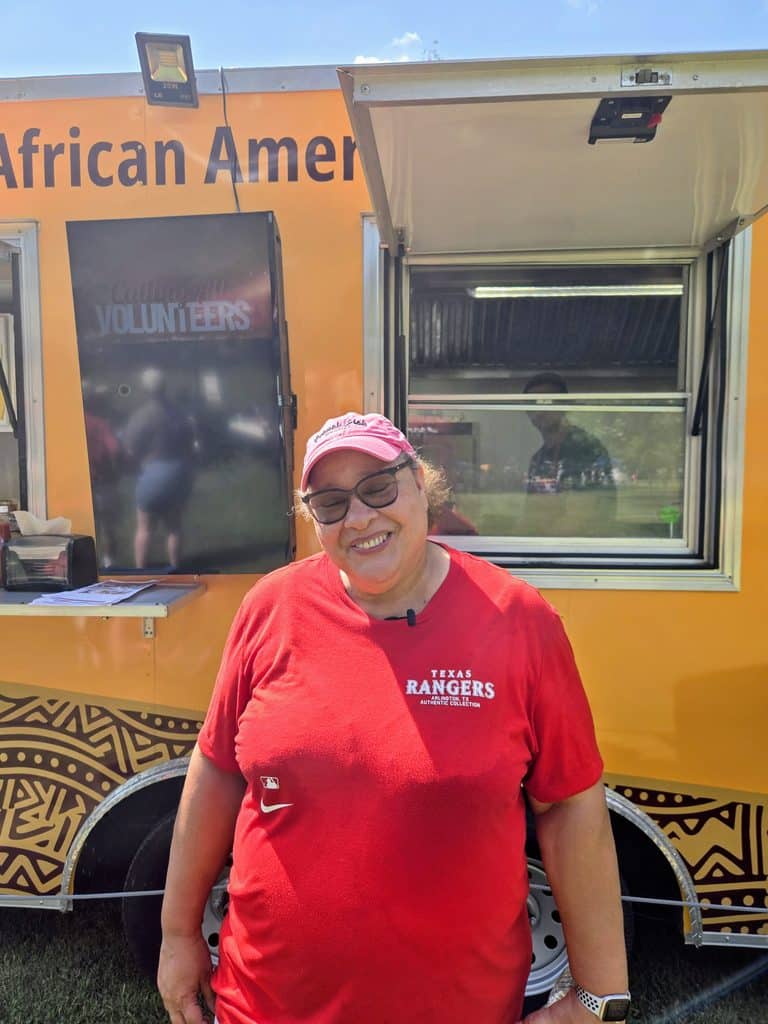
“We wanted to make sure that it was represented in the community, and we wanted to give this income to another nonprofit, the museum, that would continue to support the community,” Mayes said. For EAAM, the donation means the museum isn’t simply inheriting a truck. It is inheriting a tradition—and an opportunity to turn that tradition into long-term support for its work.
The burger that built a following
Grace and Peace began participating in the West Side Nut Club Fall Festival after the congregations joined in 2007 and introduced the donut burger around 2010. The combination was simple: a hamburger patty and cheese served between a glazed donut. It caught on. “We implemented the idea, we grew the following, and it is a great success,” Mayes said. The museum’s press release describes the donut burger as a recognizable Evansville food tradition and a favorite among Fall Festival attendees. And the operation behind it is anything but small.
The food truck was custom designed for making donut burgers. Inside are a freezer, two grills, a warmer for cooked meat, ventilation and two service windows that allow crews to work both sides of the truck. Miller said Grace and Peace sold about 14,000 donut burgers during the 2024 Fall Festival. EAAM is preparing to make more than 2,000 per day when the truck returns this year. Doing that will require more than a good recipe.
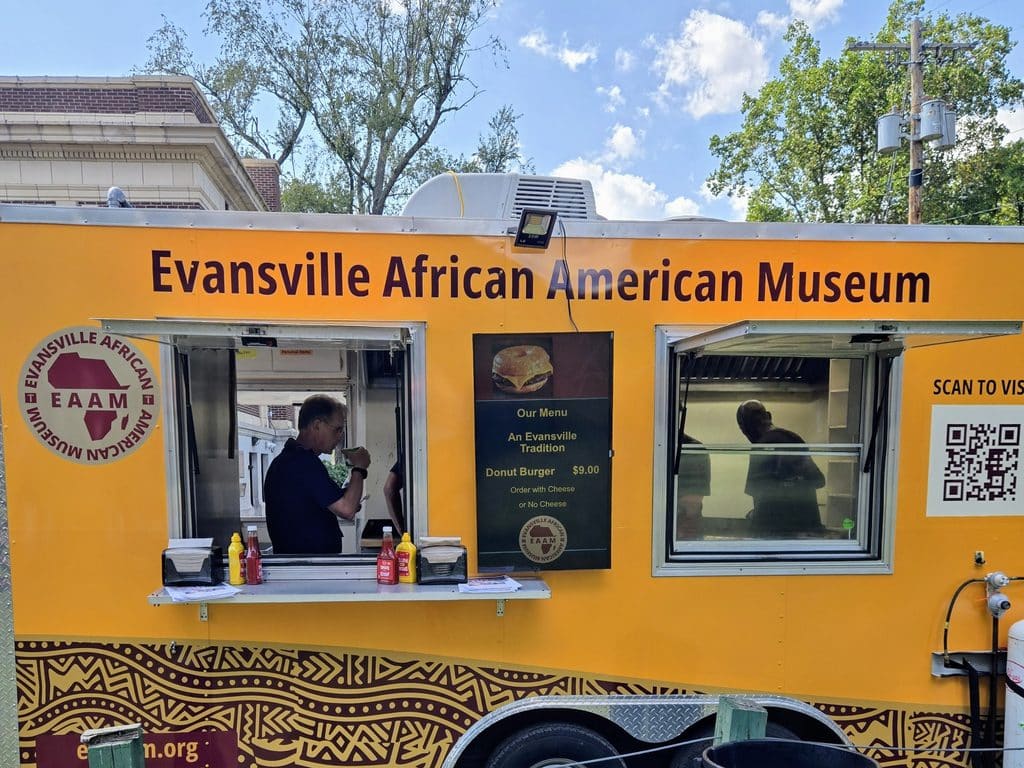
Miller estimates EAAM will need a crew of about 90 volunteers throughout Fall Festival week to keep the grills going, assemble burgers, serve customers and manage multiple lines. The scale of the operation makes the truck more than a donated piece of equipment. It is a revenue-producing community asset—one that Grace and Peace intentionally chose to pass along.
A new chapter
EAAM got its first opportunity to put the truck to work Sept. 5 at Family Day in the Park at Bayard Park. For that event, the museum partnered with the Southern Indiana Mentoring Academy, with the organizations sharing net proceeds from the fundraiser. The truck itself remains an EAAM asset that can be used for future fundraising, partnerships and community events.
For Miller, that’s part of the larger opportunity. “The food truck gives EAAM another way to meet the community where they are,” Miller said in announcing the donation. “The proceeds will help sustain our exhibitions, educational programs and preservation work, while partnerships like SIMA allow us to invest in the next generation.” That sustainability matters for an institution charged with preserving a history that can easily be lost.
EAAM sits in Evansville’s historic Baptisttown neighborhood on the former site of Lincoln Gardens, the housing development dedicated by Eleanor Roosevelt in 1937. The museum grew from a grassroots effort led by founder Sondra L. Matthews to preserve part of Lincoln Gardens when the Evansville Housing Authority planned to demolish the development. Today, EAAM preserves and shares local Black history through exhibitions, educational programming, cultural events and a preserved Lincoln Gardens apartment.
Now the museum is preserving something a little different. Not a photograph. Not a document. Not something displayed behind museum glass. A food tradition. When the West Side Nut Club Fall Festival opens Oct. 5, Grace and Peace Lutheran Church will no longer be behind the donut burger operation. But the food truck will be there, the grills will be hot and the tradition the congregation built will continue at Booth 41. This time, every burger sold will help another community institution preserve its own piece of Evansville history.
And perhaps that is part of what preserving a community legacy looks like, not simply remembering what came before, but making sure what one generation or institution built can continue doing good after it changes hands.
Author

Related Articles
Around Town: Labor Day Weekend
This week’s Around Town highlights Labor Day weekend celebrations in Evansville and Owensboro, featuring community gatherings, live music, food, family fun and cultural connection

On The Shelf: The Cruelty of Nice Folks
A hometown reckoning becomes a national mirror in Justin Ellis’s “The Cruelty of Nice Folks,” a deeply reported, beautifully written memoir about Minneapolis, race, family, grief, and the hard truths hidden beneath “nice.”
Evansville Cultural Experience brings back Family Day
What began as a neighborhood barbecue during the pandemic has grown into one of Evansville’s largest community celebrations. Now, Evansville Cultural Experience founders Philip Baker and Sharnetta Sharp are preparing to revive Family Day in the Park—and they want the entire community involved.