
The vote they need, the voters they skip
In this pointed opinion piece, Dr. Adrian M. Brooks Sr. argues that Southern Indiana Democrats cannot keep asking Black and Brown voters to deliver narrow victories while treating those same communities as seasonal afterthoughts. The challenge is direct: votes are earned through sustained investment, real relationships, and shared power—not last-minute outreach.
There’s a particular kind of insult that doesn’t announce itself. It doesn’t come as a slur or a slammed door. It comes as silence — as a knock that never happens, a flyer that never arrives, a candidate who shows up to the church potluck once every four years and calls it a relationship. In my view, that is the insult too many Black and Brown voters across Southern Indiana have experienced from the local Democratic establishment for years, and it is long past time someone said so plainly.
The Math They Won’t Say Out Loud
Walk into enough county Democratic offices in this part of the state and you’ll hear the same lament: the ground here is hard, the precincts are red, the path to victory is narrow. All true. But narrow paths are exactly where the margins matter most. And yet Black and Brown voters too often seem to be treated as an afterthought rather than a constituency worth seriously organizing. When races are close, every community matters. Yet cycle after cycle, Democrats lament turnout while too often failing to build the kind of sustained relationships that might give voters a reason to believe their participation matters.
When Black and Brown residents sit out an election, party leaders should be asking whether a lack of meaningful engagement is part of the reason. That’s not simply a turnout question. It’s a relationship question.
Outreach Is Not the Same as Investment
There’s a difference between being on a mailing list and being counted. From what I have observed, too often what passes for engagement with Black and Brown communities in this region is symbolic: a photo at a cookout, a mention in a press release around Black History Month, a candidate who learns the name of one pastor and treats that relationship as a substitute for a real ground operation.
Meanwhile, I have not seen the same level of sustained investment in the actual machinery of a campaign— paid canvassers, data investment, year-round presence, candidate recruitment — in these neighborhoods. Ask what percentage of local party staff, precinct captains or campaign budgets are dedicated to Black and Brown communities in this region. Those are questions local party leaders should be prepared to answer. You cannot expect to organize a community you’ve never actually organized in. You cannot expect voters to show up simply because Election Day has arrived.
The Cost of Being Taken for Granted
Part of what makes this sting is what can feel like an assumption underneath it — that Black and Brown voters have nowhere else to go, so their support doesn’t have to be earned. Disillusionment doesn’t always show up as a vote for the other side; sometimes it shows up as no vote at all. A community asked to show up for a party that it feels shows up for it only in November may eventually stop showing up. That’s not voter apathy. That’s a feedback loop. Neglect breeds disengagement. Disengagement produces lower turnout. Lower turnout gets interpreted as a lack of political interest. And that interpretation becomes the excuse for continued neglect. The loop continues.
What Real Investment Would Look Like
This isn’t a call for gestures. It’s a call for structure.
- Candidates who look like the communities they ask to represent. Not just appointed to advisory boards or invited to stand behind someone else’s podium, but recruited, trained, funded and run for office with the same seriousness afforded to candidates from more politically connected circles.
- Year-round presence, not seasonal outreach. Offices in the community. Organizers who live there. Relationships built during the off year, not manufactured two months before Election Day.
- Policy platforms that speak directly to local realities. Housing. Policing. Economic development. Education. Not generic talking points borrowed from a statewide script, but specific commitments shaped by the people who live with the consequences.
- Real investment in local Black and Brown institutions. Churches, civic groups and business associations should not simply be treated as places to collect endorsements. They should be engaged as genuine partners whose knowledge of their communities matters.
- Data and accountability. If a party says it is engaging a community, it should be able to explain what that engagement looks like.
Author

Related Articles
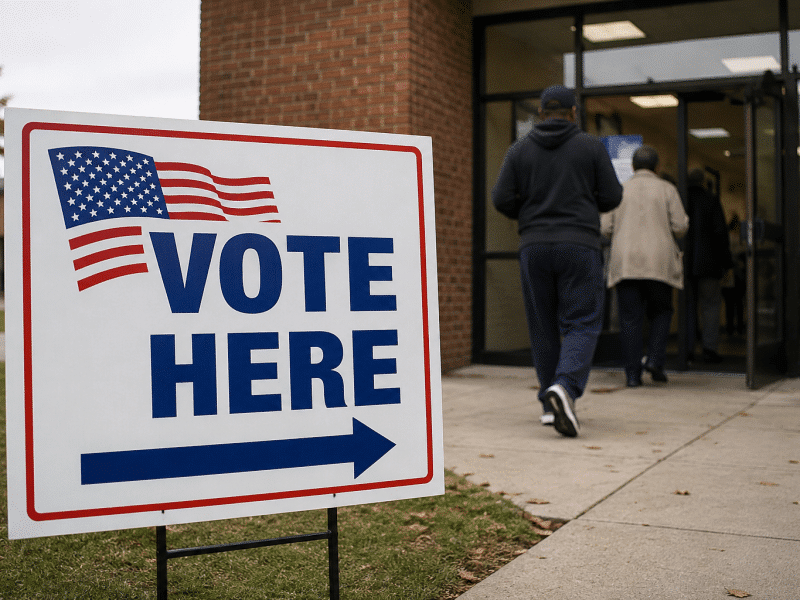
Why the Vote Matters
From healthcare and education to immigration, employment, and civil rights, sweeping policy shifts are reshaping everyday life across America. This story examines the numbers, the lived impact on minority and vulnerable communities, and why the choices voters make today will define the country we experience tomorrow.
Before “The Good Ole Days” Begin
Rami Dillard reflects on a new transition for starting high school. Although nervous about a new season, she is hopeful that it will be one of the best times of her life.

Youth Gun Violence: Shoulder to Shoulder, Not Toe to Toe
A reflection on youth violence, presence, and why healing may begin shoulder to shoulder — not toe to toe.