The motherhood Ree Quarels never imagined
What does it take to build a family when the path isn’t traditional? Evansville resident Ree Quarels shares her IVF journey, the challenges of access and information, and how her experience led her to help another woman achieve her dream of motherhood.
Her IVF journey offers a window into fertility care, barriers to access and how sharing her experience helped others seeking their own path to parenthood.
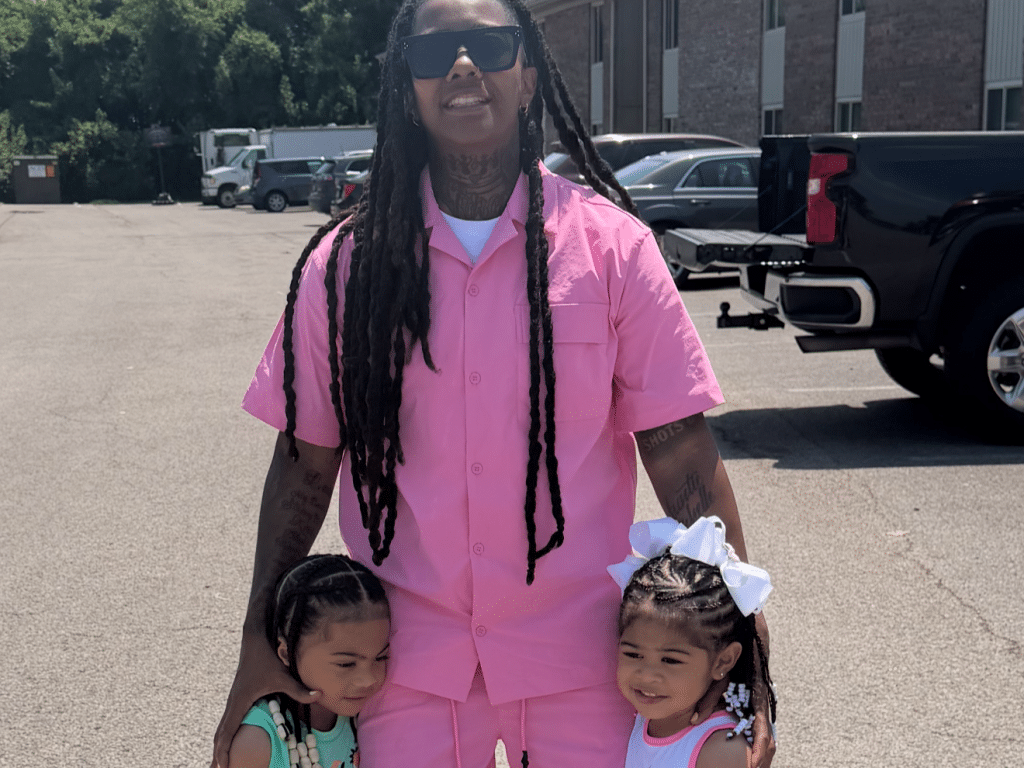
On the first night of their RV adventure, 3-year-old twins Phat Mamma and Ziggy climbed their little legs into their new bunk beds. “We did it, Mommy! We did it!” they cheered, applauding as they settled in. For Aurelia “Ree” Quarels, the moment marked the beginning of a new adventure with the children she once wasn’t sure she would ever have.
This fall, the Evansville mother and her twins are traveling across the United States in an RV, documenting their journey along the way. But long before the three of them hit the road, Quarels had to imagine a path to motherhood that looked different from the one she originally envisioned.
Choosing motherhood
Quarels grew up in Evansville as an only child and spent nearly nine years working at Toyota. She wanted children, but as a lesbian who did not initially see herself carrying a pregnancy, she imagined a future partner would carry their child. In a previous relationship, that was the plan. Her partner became pregnant but experienced a miscarriage. The relationship eventually ended. The desire to become a mother did not.
Around 2019 Quarels began considering whether she was willing to carry a child herself. The idea frightened her. Quarels describes herself as a “dominant lesbian,” and pregnancy did not fit the way she had pictured herself. She also worried about how others would respond to seeing someone with her gender expression pregnant.
“It took everything in my spirit trying to get myself ready,” she said. “I just prayed on it and I locked in. I said, if anybody can do it, it’s me.”
Quarels turned to invitro fertilization, commonly called IVF. IVF involves retrieving eggs from the ovaries and fertilizing them with sperm in a laboratory to create embryos. One or more embryos can then be transferred into a uterus in hopes of establishing a pregnancy.
The treatment is used by people experiencing infertility and others who may need donated sperm, eggs or embryos to become pregnant. Quarels had not been diagnosed with infertility. She needed donor sperm.
Information and cost can shape access
Quarels had to save enough to cover fertility medications and medical procedures. She found a fertility physician, selected a sperm donor and underwent an egg retrieval. Her eggs were fertilized with donor sperm, resulting in six frozen embryos, she said. Then came the daily injections.
Over time, the limited places where she could give herself the shots became sore and knotted. “When someone wants to go through IVF, you know how dedicated they are,” Quarels said. “Every day, no days off.” For many people, cost can help determine whether fertility treatment is an option at all.
According to a 2025 report from the National Center for Health Statistics, 7.1% of Black women ages 20 to 49 had ever used medical help to become pregnant, compared with 12.4% of White women.
Insurance also made a difference. Among women with private coverage, 13.6% had received medical help becoming pregnant, compared with 4.4% of women with public insurance and 5.4% of uninsured women.
Those figures measure use of fertility services; not how many people needed them. The American Society for Reproductive Medicine has identified economic barriers as a leading driver of unequal access, along with factors including limited information, geography and discrimination.
For Quarels, information mattered, too. She describes IVF as a process people often want explained but that others sometimes “gatekeep.” Knowing what options exist, where to start and what questions to ask can be a barrier of its own.
A faint line
At 5 a.m., five days after two frozen embryos had been transferred, Quarels walked into her bathroom with a pregnancy test and a camera. She had never been pregnant. Looking closely at the test, she saw a faint line.
“When I looked at that stick and I seen that faint line, I was going crazy,” Quarels recalled. “I put so much into this — blood, sweat and tears. … Overall, I was just thankful.”
Both embryos implanted. She was pregnant with twins. Her mother had been beside her throughout the fertility process. Her parents had reached a point where they thought they might never become grandparents. “When I made this decision, I realized really fast that I didn’t just change my life,” Quarels said. “I changed my mom’s life, and I changed my dad’s life.”
Her father became a steady presence after the twins were born. Today, Quarels sees both parents as part of the village raising Phat Mamma and Ziggy Man.
Sharing her story
At first, Quarels wasn’t sure she wanted people to see her pregnant. She anticipated criticism about her sexuality and gender expression. Some of it came. But followers also began asking to see her growing belly, and their encouragement helped her become more comfortable sharing the experience.
A video of Quarels telling her mother she was pregnant received nearly 8 million views, she said. Her Facebook following eventually grew to more than 1 million. She continued documenting her pregnancy, the twins’ birth and her experiences as a first-time mother. “I’m not trying to make things sound all great, like I’m perfect,” she said. “I’m just showing up and showing my first experience as a mother.”
The visibility also brought scrutiny. Some commenters questioned her gender expression or made assumptions about how her sexuality would affect her children. Others criticized her parenting. Quarels said some attitudes changed as people continued watching. “They didn’t give us a chance,” she said. “And now … they’ve adopted our family all over the world.”
Women also began reaching out with questions about IVF and sharing their own experiences with infertility, miscarriage and unsuccessful fertility treatments. Others wanted to understand their options when pregnancy wasn’t possible within their relationship. Quarels had learned how difficult it could be to find information when she began. Now, she could share what she knew. Helping another woman become a mother After the twins were born, Quarels still had four frozen embryos.
Hearing from women struggling to become pregnant made her consider what she could do with them. “Once I realized that a lot of people have fertility issues, I thought to myself, how can I help someone else?” she said. Quarels announced on social media that she planned to donate embryos to another woman trying to become a mother.
Embryo donation allows embryos created through IVF for one person to be transferred to someone else who hopes to carry a pregnancy. Women from around the world responded and shared their stories. One stayed with her.
Quarels has protected the recipient’s privacy but said the woman had already attempted intrauterine insemination and continued trying to become pregnant. After Quarels selected her, the woman traveled to Evansville for the embryo transfer rather than having the embryos shipped to another state. The transfer was successful. The woman gave birth to a son last September.
Quarels said she donated the embryos without charging the recipient or her family. Learning the transfer had worked brought a feeling close to the joy of discovering her own pregnancy, she said.
“I understand what it’s like to turn a dream into a reality,” Quarels said. “I was put in a position that I could help someone else.” Quarels believes supporting people trying to become parents begins with openness, even when their experience looks different from your own.
“We have to start by just being open to everything, not being so quick to judge,” she said. “When someone is trying to start a family, I think just being there for them.” The road ahead Quarels’ own village remains close. Her parents are an active part of Phat Mamma and Ziggy Man’s lives and part of the support system that allows her to take on what’s next.
This fall, Quarels and the twins are traveling across the United States in an RV, giving the children a chance to experience places they’ve never seen and their mother another chapter of their lives to document. “This is the first time I’m doing anything like this, and I’m just really excited,” she said. “At this point, I believe life is about taking chances and doing things you never imagined.”
On that first night in the RV, “We did it” was Phat Mamma and Ziggy’s celebration of climbing into their bunk beds. For their mother, those three words carry a little more weight.
There was the decision to carry a child when she had never imagined herself pregnant. The injections. The money she saved. The faint line on a pregnancy test. Her parents becoming grandparents. The twins who made her a mother. And even the chance to help another woman experience motherhood. Now, those twins are 3 years old, climbing into their beds inside an RV with a whole country ahead of them.
They did it.
Author
Related Articles
Alzheimer’s Disease: The Long Goodbye
Learn how lifestyle choices may reduce Alzheimer’s risk, how the disease is diagnosed, and why early diagnosis matters.
Alzheimer’s Disease: The Long Goodbye
Alzheimer’s disease affects millions of families, but conversations about memory loss, caregiving and brain health often begin too late. Part one of a new Our Times series explains the disease, its warning signs and why Black families face a disproportionate risk.
The Fit Generation
From learning to swim and building confidence to creating lifelong healthy habits, Memorial Fit Camp is helping shape a stronger, healthier generation—one day at a time.