
Indiana Senate Rejects Redistricting Plan After Intense Debate
Indiana Senate rejects redistricting plan.
By Paola Marizán
Indiana’s contentious redistricting debate reached a critical turning point Thursday after the full Senate voted down the proposal to redraw the state’s nine congressional districts. The vote followed weeks of testimony, public pressure, and intense debate over how the proposed map would reshape political representation across Indiana.
More than 120 Hoosiers testified at earlier hearings, warning lawmakers that the proposed boundaries would fracture communities, dilute local influence, and weaken representation for regions like Southwest Indiana. Despite broad public interest and lengthy discussion, the Senate’s action on Thursday now halts the proposal unless lawmakers revive it in a future session.
State Rep. Alex Burton (D-Evansville) issued the following statement after the Indiana Senate voted against advancing HB 1032, halting the Republican redistricting proposal: “Today proves that Hoosier voters and voices matter. Outside influence sought to force redistricting, and it didn’t work – even in the face of loud voices, swatting, and bomb threats.”
What Redistricting Means for Hoosiers
Redistricting determines who represents Indiana in Congress and shapes how federal funds and resources flow into local communities. When district lines split neighborhoods or merge areas with little in common, residents often lose influence over decisions that affect their daily lives.
For example, an Evansville neighborhood currently represented alongside nearby river communities could be drawn into a district that stretches across multiple counties. A shift like that can make it harder to secure funding for road repairs, support for schools, public safety resources, or oversight of rising utility costs.
Many Hoosiers worried that the proposed map would combine urban and rural regions with sharply different needs, making it difficult for any elected official to adequately represent the full range of concerns. Critics argued that this weakens accountability and limits the ability of communities to elect leaders who understand their lived realities.
Inside the Evansville Town Hall
Weeks before the Senate vote, State Rep. Alex Burton hosted a public town hall in Evansville to help residents understand the implications of the proposed maps. Former U.S. Senator and Ambassador Joe Donnelly joined him for the discussion, speaking about how district boundaries shape representation and access to federal resources.
Burton reminded residents that the issues weighing on families had little to do with partisan redistricting.
“I am remaining optimistic for the Indiana Senate to vote against mid-cycle redistricting. This abnormal attempt is hindering real issues from being discussed. A lot of time and energy has been spent on redistricting when Hoosiers are more interested in child care, housing, energy costs, healthcare, and food access being addressed.”
Donnelly echoed the call for fairness and transparency, emphasizing that redistricting impacts all Hoosiers regardless of party affiliation.
“This isn’t about Democrats or Republicans, it’s about making sure every Hoosier has a fair voice. Our government belongs to the people, and the maps should reflect that.”
A Divided Senate and Rising Tensions
While the vote is now complete, deep divisions remain. Several senators, including Republicans, publicly voiced concerns about the fairness and long-term consequences of the proposal.
Some lawmakers pointed to intense pressure from national figures urging Indiana to adopt a more aggressively partisan map. The Indiana State Police confirmed ongoing investigations into threats made against some senators, escalating tensions around the vote, and raising concerns about political intimidation.
Even with this outcome, many senators acknowledged that the process has left the legislature and the public deeply divided, but optimistic.
“I’m looking forward to bold action, reasonable policy discussions, and a legislative session that keeps Hoosiers first. Families, teachers, small business owners, public safety officers, and local elected officials are depending on us.” Rep. Alex Burton said.
What Happens Now
The proposal cannot move forward this session unless lawmakers revive it through new legislation. For now, Indiana would continue using its current congressional map unless a revised proposal emerges.
Check the Our Times Newspaper online for updates on the governor’s response, reactions from community members, and continued reporting on what this decision means for Southwest Indiana.
Author

Related Articles

More Than Remembrance: Evansville Honors the Life and Legacy of Dr. King
The community honored the life and legacy of Dr. King through various celebrations across the city of Evansville.
Community Still Seeking Answers After Fatal Police Shooting of Everett Nunn
Two weeks after the fatal police shooting of Everett M. Nunn, Evansville residents continue to push for clarity, accountability, and an investigation that extends beyond local oversight alone.
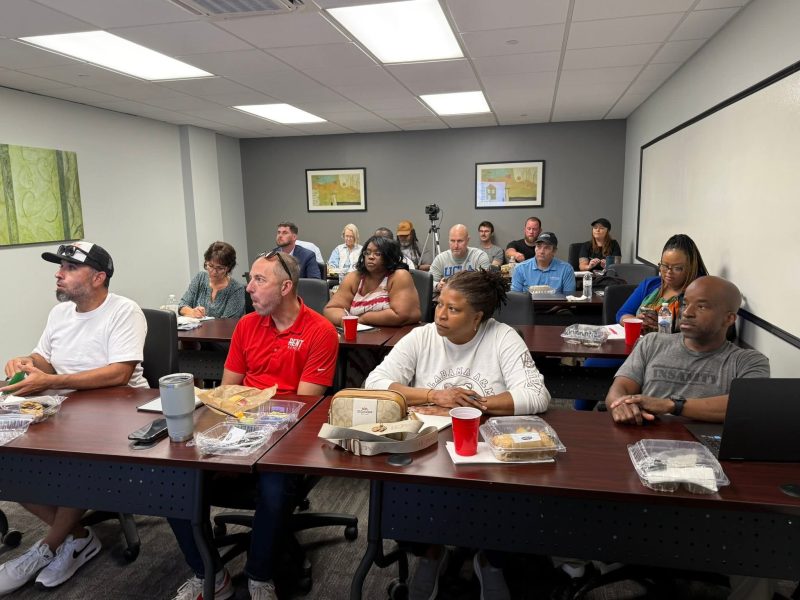
JumpStart EVV Graduates New Class of Community Developers
Nineteen residents completed the 10-week JumpStart EVV developer training program—launched to help everyday Evansville residents acquire the skills, mentorship and financing knowledge needed to become small-scale developers.