Roots 101 Founder sparks reflection and unity in Evansville
Roots 101 African American Museum CEO Lamont Collins energized the Evansville African American Museum on August 9, 2025, with a powerful presentation promoting unity, reflection, and a deeper understanding of Black history. Sponsored by All Saints Catholic Parish and Mt. Olive Galilee Church, the event drew over 50 attendees to hear Collins share the inspiring journey of Roots 101 and the significance of preserving African American heritage.
By Floyd Edwards
The chant rang out with conviction: “Whose house? Our house! Whose house? Our house!” It was the rallying cry of Mr. Lamont Collins, CEO and Director of the Roots 101 African American Museum in Louisville, KY, as he brought his electrifying presentation to the Evansville African American Museum on August 9, 2025.
Sponsored by a collaborative effort between All Saints Catholic Parish and Mt. Olive Galilee Church, the event drew more than 50 residents from across the region. Attendees gathered to hear Collins share the remarkable origin story of Roots 101—a museum dedicated to promoting understanding and inspiring appreciation for the achievements, contributions, and lived experiences of African Americans.
Collins opened with a powerful declaration:
“We are descendants of Kings and Queens who were enslaved in America.”
From that moment on, the evening unfolded as a tapestry of history, emotion, and challenge.
He recounted how his passion for historical artifacts was sparked by a gift from his mother—an autographed photo of Muhammad Ali. That gesture planted a seed that grew into a calling, eventually manifesting as a two-story museum overflowing with authentic items: African carvings, royal jewelry, cultural art, and the brutal instruments of bondage.
His presentation was rich with humor, insight, and sobering truths. Collins described how African kings revered their queens, placing them physically above them on thrones, and illustrated the unity of African societies through vibrant images of art and craftsmanship. He emphasized that those who survived the Middle Passage were not broken people, but the strongest of the strong—highly skilled individuals who learned new languages and dialects even while shackled aboard slave ships.
One of the most haunting moments came when Collins displayed a photo of a statue depicting enslaved Africans—children and a pregnant woman—chained together, burdened with roughly 45 pounds of iron. He explained that some Africans were coerced into aiding enslavers, a painful truth reflected in the artifact’s imagery.
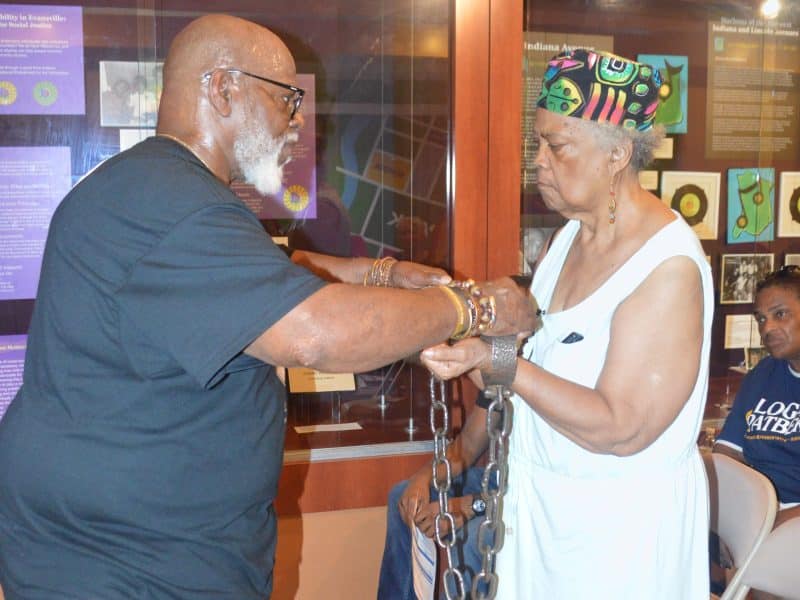
To make history tangible, Collins brought with him actual chains from the 1800s used to restrain enslaved people. He invited attendees to physically experience the weight and emotional gravity of being shackled.
Among those who accepted the invitation was Sondra Matthews, founder of the Evansville African American Museum. As she wore the heavy iron shackles, she offered a solemn reflection:
“The weight is unbearable—but not nearly as heavy as the history it carries.”
The evening closed not in silence, but in solidarity. Collins’ message was clear: history must be remembered, honored, and felt. Through museums like Roots 101 and gatherings like this one, legacy lives on—not in textbooks alone, but in hearts, hands, and voices.
For more on the Roots 101 Museum and its mission, visit www.roots-101.org.
Author

Related Articles

Rotary Club honors Sondra Matthews with Civic Award
Sondra Matthews has spent decades telling Evansville’s stories, preserving Black history, mentoring leaders, and building institutions that continue to shape the community. Now, the Rotary Club of Evansville has honored her with its 2026 Civic Award—recognizing a legacy rooted in faith, service, and generations of impact.
Freedom Remembered, Community Celebrated: Juneteenth Across the Tri-State
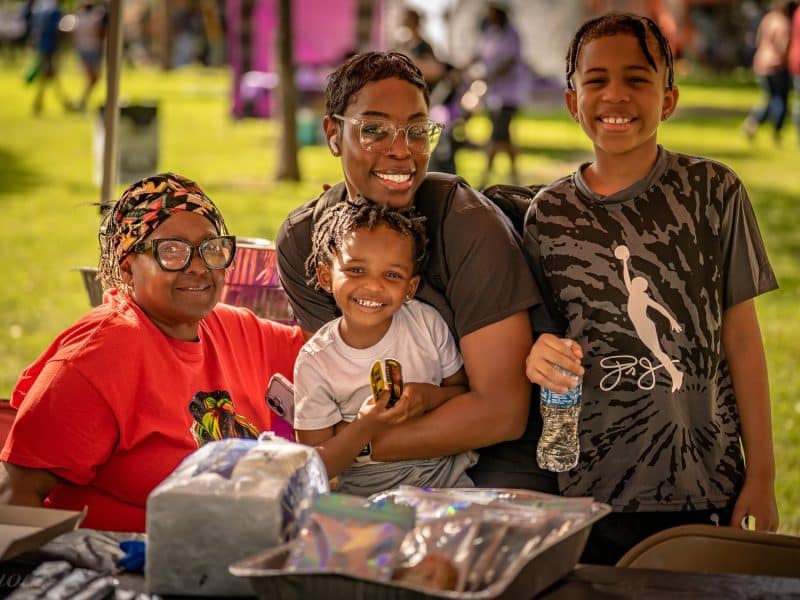
Across the Tri-State, Juneteenth brought neighbors together in a shared celebration of freedom, history, and community—reminding us that unity is one of freedom’s greatest legacies.
A good and faithful servant: Rev. Larry Lewis has put in his work
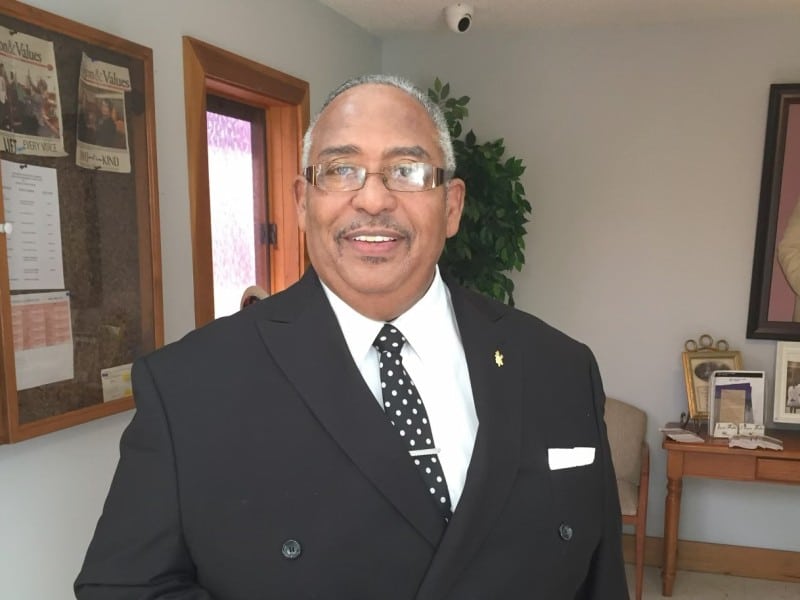
Reverend Larry Lewis has been behind the podium teaching and preaching the word of God for 55 years and still ‘is no ways tired.’ His retirement, 55th ministerial anniversary and final sermon is May 17, 2026, 10:45 AM at Zion Missionary Baptist Church, Owensboro, KY.