
We Have Limits. God Doesn’t.
In this editorial, we are reminded that when we reach out limits of strength, resources, ideas, and faith, we must reconnect to our source-God. We have limits. He doesn’t.
My 3-year-old grandson loves playing on the phone. Like most children his age, he has already figured out that this little device can provide seemingly endless entertainment. But eventually, something happens that he doesn’t quite understand. The battery dies. And when it does, he gets frustrated.
To him, the phone has stopped working. The fun is over. The thing that was giving him what he wanted just moments ago can no longer produce anything. What he doesn’t yet understand is that the phone hasn’t lost its usefulness. It has simply reached the limit of its own power. It needs to be connected to the source. I wonder how often we do the same thing. We reach the limits of our strength, our resources, our ideas and even our faith, and we assume that because we cannot see a way forward, there must not be one. But we have limits. God doesn’t.
That may be particularly difficult to remember in a world that has trained us not to wait. We can order something today and expect it on our doorstep tomorrow. We put food in a microwave and have dinner in minutes. Our bills can be paid automatically. Information that once required a trip to the library is available in seconds. Convenience isn’t a bad thing. But somewhere along the way, speed has taught us that waiting means something has gone wrong.
So, what happens when the thing we’re waiting for can’t be delivered overnight? What happens when you’re waiting for your child to come home? Waiting for a job. Waiting for the doctor’s report. Waiting for the relationship to heal. Waiting for an opportunity.
Waiting for justice. Waiting for enough money to finally stop choosing which bill gets paid this month. Waiting for something in your community to change after hearing for years that change is coming. Those waits don’t operate on our schedules. And when waiting becomes long enough, disappointment can begin whispering something dangerous: Maybe nothing is going to change.
Isaiah 40 speaks directly into that kind of exhaustion. The people receiving Isaiah’s message knew something about waiting. They knew displacement, uncertainty and the feeling that circumstances had lasted far longer than anyone wanted. And into that exhaustion comes a reminder: God does not faint. God does not grow weary. That’s important because sometimes we make God subject to the same limitations we experience. We’re tired, so we assume God must be tired of hearing about it. We’ve run out of options, so we assume God has run out of possibilities. We’ve knocked on every door we know to knock on, so we decide there must not be another door. But our depletion is not God’s depletion. We have limits. God doesn’t.
That doesn’t mean faith requires pretending everything is fine. Sometimes Christians have been too quick to tell hurting people to “just have faith,” when what they needed first was someone willing to acknowledge that what they were carrying was heavy. Isaiah doesn’t deny human exhaustion. In fact, the text acknowledges it: even the young grow tired and weary. Everybody eventually reaches empty.
The question isn’t whether you will ever reach your limit. The question is what you do when you get there. A phone with 2% battery doesn’t need encouragement. It doesn’t need somebody yelling at it to work harder. It doesn’t need a new productivity strategy. It needs a power source. So do we. That’s why waiting on God isn’t doing nothing. Waiting can mean praying while you’re still hurting. Working while you haven’t seen the results. Showing up when nobody applauds. Doing what is right when doing wrong would be easier.
Standing for justice when progress seems painfully slow. Loving people when you aren’t sure that love will be returned. And sometimes waiting simply means putting one foot in front of the other. We love the part of Isaiah that says we will “mount up with wings as eagles.” Everybody wants to soar. But the passage doesn’t end with soaring. It talks about running. And then it talks about walking. I’ve come to believe that walking may require the greatest faith of all. Soaring is spectacular. Walking is Tuesday morning. Walking is getting up again.
Walking is caring for your family. Walking is rebuilding. Walking is believing after disappointment. Walking is continuing when the breakthrough you’ve prayed for still hasn’t arrived.
There will be seasons when God allows us to soar. There will be seasons when we can run. And there will be seasons when all we can do is walk. Walk anyway. Your pace is not proof that God has abandoned you. And your wait is not necessarily wasted time. Some things are being built in us that could never be produced instantly. Patience. Wisdom. Endurance. Compassion. Faith.
We live in a community where many people are waiting right now—for economic opportunity, safer neighborhoods, better health, stronger schools, justice, reconciliation and reasons to believe tomorrow can be different from today. We should work toward those things.
Faith should never become an excuse for inaction. But we must also remember that our own ability is finite. We will get tired. Institutions will disappoint us. Plans will fail. People will fail. Sometimes we will fail ourselves. And when we reach that moment, perhaps we should remember a 3-year-old staring at a dead phone. The answer isn’t always to throw it away. Sometimes you simply need to reconnect to the source.
We have limits. Thank God, He doesn’t.
Author

Related Articles

Am I My Brother’s Keeper?
A young man’s death has left Evansville grieving—and asking what responsibility we share for the safety and future of our children. In this reflection, Rasheedah Ajibade explores what it truly means to be our brother’s keeper—and why concern must become action before another tragedy occurs.
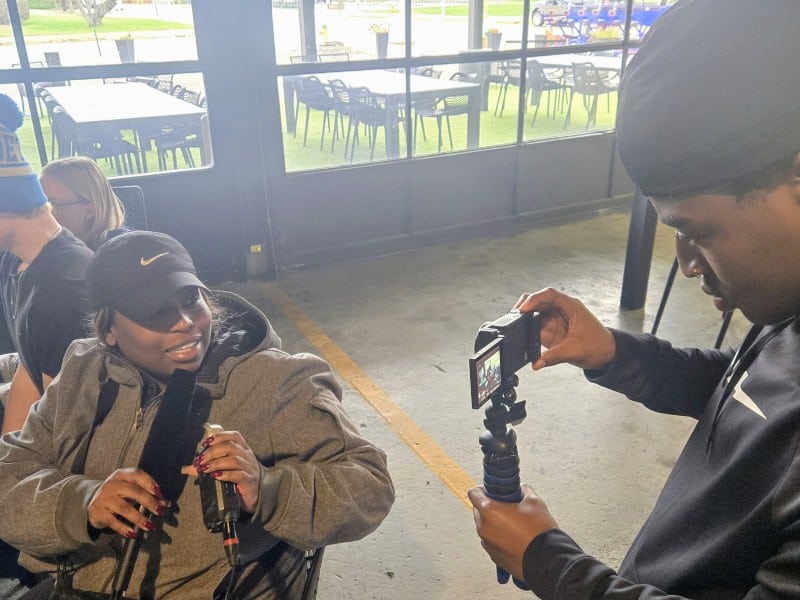
Investing in the Next Generation
In this special Youth Voices edition, Rasheedah Ajibade reflects on what it truly means to invest in young people—not just as future leaders, but as vital voices in our communities today.

America at 250: What will we build next?
As America marks 250 years, this editorial asks what it means to celebrate a nation’s promise while still confronting the unfinished work of equality, history, and opportunity—and challenges us to decide what kind of future we will build next.