
Learning Today, Leading Tomorrow
From reading aloud to managing money, local middle schoolers are building the confidence, responsibility, and practical skills they need to meet life’s challenges—and shape brighter futures.
By Austin Ajibade
Some people believe the jump in maturity between childhood and adolescence is instantaneous, but the growth takes time and acquisition. This development is most successful when children are actively learning skills and traits that will benefit their ability to appropriately respond to certain situations. That is where the program, Life Skills, comes into play. Life skills is a year round program that services students grades 6th-8th. It is operated by Memorial Community Development Corp when school is not in session. The coordinator is Emmanuel Fletcher.
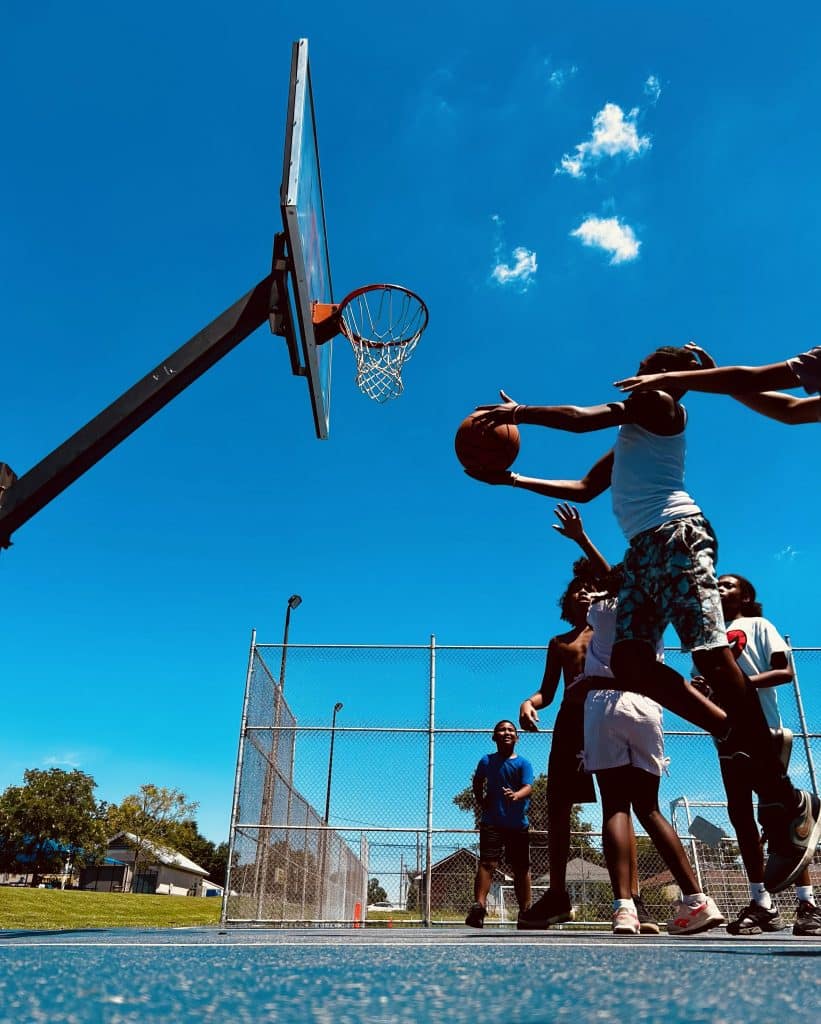
Life Skills was started in 2022 with the goal of enhancing the lives of middle school students in the community. It receives partnerships from within the community such as: New Tech, Ivy Tech, and other volunteers. With the help of coordinators, parents, and partnerships; Life Skills focuses on teaching personal development, confidence, and responsibility. So what does a typical day in life skills look like? From Tuesday through Thursday after school, students arrive at the program and meet with their leader before taking on new challenges and learning new skills. These skills include: reading, cooking, financial literacy, safety, etc. Not to mention most activities the students participate in are free of charge. While Life Skills does take the education of their students seriously, they also take participants’ personal enjoyment into consideration.

To better understand the attendees’ personal feelings about this program, we interviewed a member of the program for her honest opinion. During the interview, our interviewee, named Emma, tells us about the things she enjoys and the things that have challenged her. She says that while she was thoroughly surprised about the amount of educational activities Life Skills provided, it has helped her tackle the challenge of her ability to read aloud. That’s just one of the many positive outcomes Life Skills is able to provide for its students. We also asked Emma for any suggestions she had for people looking to participate in this program, and she said,“I wouldn’t recommend this program if you aren’t prepared for the educational challenges Life Skills brings daily.” Even though it is highly meaningful to comprehend this program from the perspective of a member, it is also significant to appreciate the perspective of the program leader, hence why we interviewed Emmanuel Fletcher. Emmanuel said that working in the program is important to him because of the challenges youth are facing today and the urge he feels to set them up for success. In addition to this, he believes that because of the diverse ages in the program, youth are not only able to learn from him, but from one another.
One may be wondering, why does all of this matter? It’s important to realize we live in a day and age where the youth are easily susceptible to hanging out with the wrong group of people and making life altering decisions. When experiences like these are popular for today’s adolescents it is crucial to implement self-disciplinary traits early on. As stated before, Life Skills is focused on teaching these qualities to those who attend, in hopes that what they learn will positively benefit their futures. If this program interests you, an obvious question arises, how do I get my child in Life Skills? Call the number 812-423-2500 or shoot an email to lifeskills@memorialcdc.org and simply ask to sign up. It’s as easy as that! Nevertheless, while Life Skills take great value in making sure kids are well equipped for the years as they get older, it is essential to bear in mind that the real change starts at home from what children directly and indirectly absorb from their guardians.
Related Articles
The Fit Generation
From learning to swim and building confidence to creating lifelong healthy habits, Memorial Fit Camp is helping shape a stronger, healthier generation—one day at a time.
Beyond the backpack: What teens need from their parents
As families gear up for a new school year, Kenzie Brooks shares what parents and caregivers can do to help students feel more supported.

Young & Established supports youth through mentorship
What started as one college student mentoring 11 kids has grown into a community organization serving youth across six Evansville schools. Read how founder Courtney Johnson is working to create opportunities and support for local youth.