
Zerah Priestley Carter; A purpose driven life that became a lasting legacy
On Saturday, April 18, alumni, students, and community members gathered at the University of Evansville (UE) for a memorial bench dedication honoring Zerah Priestley Carter, hosted by the African American Alumni Association. The bench, one of many across the UE campus, is made remarkable by whose name it bears and the lasting impact of her presence.
On Saturday, April 18, alumni, students, and community members gathered at the University of Evansville (UE) for a memorial bench dedication honoring Zerah Priestley Carter, hosted by the African American Alumni Association. The bench, one of many across the UE campus, is made remarkable by whose name it bears and the lasting impact of her presence. Among those in attendance were UEAAA President Emeritus Dr. Michael Woodard and Watez Phelps Sr., also a former UEAAA president.
Carter was the first African American student to attend the institution then known as Evansville College, later renamed the University of Evansville. In 1934—decades before the Civil Rights Movement—the college’s president made the decision to move away from its “whites only” policy and admit its first Black student.
Beyond her strong academic record, Carter entered an environment where she would be expected to endure challenges few others had faced. During the ceremony, Woodard reflected on that reality, noting that leaders at the time sought a student who could “see and not see, hear and not hear”—a way of describing the strength and restraint required to navigate a campus not yet accustomed to Black students.
But endure she did. Carter graduated with a Bachelor of Science in Education and went on to devote her life to teaching within the Evansville Vanderburgh School Corporation. Her impact extended far beyond the classroom. She was known for her generosity and commitment to the community, often holding yard sales that were really opportunities to give items away to those in need.
Her nephew, Timothy Womack, who attended the ceremony, spoke fondly of his aunt, describing her as a woman ahead of her time; accepting of all people, regardless of race, religion, or sexual orientation. He also noted her strong sense of cultural identity, including an Afrocentric wedding ceremony that reflected her values. She touched the hearts and minds of many students, some of whom were present for the dedication.
University of Evansville President Christopher Pietruszkiewicz conducted the formal dedication and offered closing remarks to the ceremony.
Related Articles

On The Shelf: Ice Cream Queen: Flavor from Black America’s Past, Present, and Future
Cool off with a scoop of history, culture, and irresistible flavor in this week’s On The Shelf review. Ice Cream Queen by Lokelani Alabanza blends Black culinary history with joyful recipes and sweet summer inspiration—perfect for readers who love food, heritage, and a little something delicious on the page.

Beyond Black Panther: The Rise of Sword and Soul
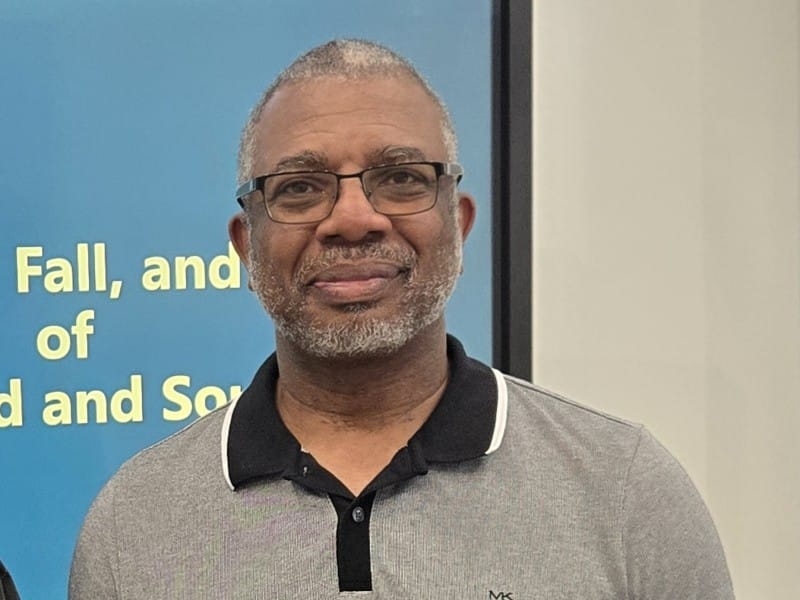
Award-winning author Milton J. Davis visited Evansville’s BIPOC Comic Fest to explore the origins of Sword and Soul, a fantasy genre rooted in African history, mythology, and culture. His presentation traced the movement from Charles R. Saunders to today’s independent creators, showing how Black authors are reshaping fantasy by telling their own stories.