
Cutting his own path: Aaron Soulberry builds opportunity through art
A New Shade of Soul, Aaron Soulberry’s exhibit at the University of Evansville Art Gallery, was open to the public in the month of February. It was not only a celebration of Black History Month, but also a celebration of art, creativity, and community. The exhibit, which included nineteen pieces, was inspired by experiences, encounters, and ideals that Soulberry has carried with him.
In the spare room of his small two-bedroom apartment, Aaron Soulberry tears and cuts paper of various colors, patterns, and sizes — each piece serving a purpose — to create something unique and beautiful that tells a story.
A New Shade of Soul, Soulberry’s exhibit at the University of Evansville Art Gallery, was open to the public in the month of February. It was not only a celebration of Black History Month, but also a celebration of art, creativity, and community. The exhibit, which included nineteen pieces, was inspired by experiences, encounters, and ideals that Soulberry has carried with him.
His artwork is unique compared to traditional art forms. Soulberry takes individual pieces of paper and glues them together to create dynamic portraits. He describes his method as similar to collage — an art form where pieces of paper, often from magazines, are torn or cut and then taped or glued together to design an image. Once complete, Soulberry covers the portrait with a special coating that preserves the paper. From a distance, or at certain angles, the works may appear to be paintings. Up close, viewers can see the added dimension of layered paper.
When asked why he began working in this style, Soulberry explained, “I was a child when I started to show an interest in art. First, I thought about painting, but we didn’t have paint at home. However, we did have paper. I was trying to impress a girl and wanted to make her something, so I simply used what I had and began making things out of paper.”
Because he enjoyed creating with paper, Soulberry continued down that path. He knew that his work was unique because people often told him they had never seen creations like his.
His father was also influential in his artistic journey. Growing up, Soulberry recalls watching his father work on projects at home, often building things with his hands. He enjoyed the practicality of it and would help however he could — holding tools or steadying a stool. Even then, he found satisfaction in observing and assisting his father, developing an appreciation for working with his hands.
Although art was a way for Soulberry to express himself, he did not initially pursue it as a career. After graduating from high school, he told his parents he wanted to attend college to study marketing. “In our community, when you tell people you want to be an artist, no one usually accepts that — for fear that you won’t be successful or able to make a living,” he said.
In a short time, Soulberry knew marketing was not his path. Instead of being honest with his parents at first, he pretended to attend school while spending his time at the library creating art. When he finally came clean, he learned his parents were supportive of his dream. They simply reminded him that he would need to support himself financially. So that’s what he did. He secured full-time employment, and in his time away from work, he created art. In this exhibit, some of the first pieces he ever made were displayed — a constant reminder of where it all began.
Today, Soulberry is involved in several arts organizations and partners with youth-serving groups to expose young people to the beauty and opportunity within art. He served as a board member for the Arts Council of Southwestern Indiana and has had exhibitions at the Evansville Museum and other galleries in the area.
Last year, Soulberry took a major bet on himself to share a special project with the community. He approached the Victory Theatre about hosting an onstage exhibit of his installation Three Miles to Infinity, a paper-painted chain stretching 15,840 feet — the equivalent of three miles. His parents, fellow artists, and youth from the Carver Community Center all helped bring the project to life.
The idea was inspired while doing research. He came across this fact: the human eye can see as far as three miles. The phrase “as far as the eye can see” often translates to something infinite. For Soulberry, three miles sounded big — but doable. He began cutting paper and stapling it together because, while imagining three miles was difficult-seeing it, standing near it, holding it-made it tangible. That image is how Soulberry views dreams. “Whatever your big idea is- your big goal, the thing you think is unattainable — it’s not as big as you really think,” he said.
The artwork serves as a visual representation of that belief. Students at the Carver Community Center even wrote their biggest dreams on individual links in the chain, connecting their aspirations into something bigger than themselves. “I’ve learned that you can sit and wait for something to catch on and hope somebody asks you to do something, or you can do it yourself. You don’t need permission-just the courage to go for it.” That mindset is already shaping what’s next.
In March, Soulberry is launching “Yam Jam” in honor of Youth Art Month — a free, hands-on art experience for young people in the community. The event will take place during spring break and will feature workshops led by local creatives. The goal is to give students an opportunity to create, explore, and see themselves reflected in the art scene.
For Soulberry, A New Shade of Soul is not a stopping point. It is proof that dreams can be measured, constructed, and shared. And if three miles of paper can become something tangible, then the next big idea can too.
Author

Related Articles

From Negro Spirituals to Modern Music
Negro Spirituals have a major influence on today’s music. This article talks about the evolution of music.

Owensboro Black Expo forges to the next plateau
This year, Owensboro Black Expo celebrates 53 years and stands as the longest operating Black organization in Owensboro, KY.
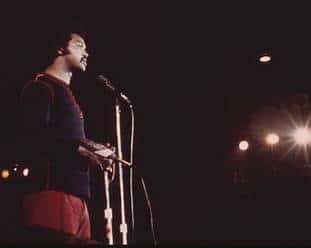
Notable Death: Rev. Jesse L. Jackson Sr. (1941–2026)
Rev. Jesse L. Jackson Sr., an icon of the American civil rights movement died on February 17, 2026, at the age of 84.