Fourth Ward Caucus to Fill Council Seat With Deep Community Legacy
Vanderburgh County Democratic Party has scheduled a caucus to select a new Fourth Ward Council member, a seat that carries deep meaning for many resident.
By Paola Marizán and Rasheedah Ajibade
The Vanderburgh County Democratic Party has scheduled a caucus to select a new Evansville City Council member for the Fourth Ward, beginning the process of filling a seat that carries both political responsibility and deep meaning for many residents.
According to party officials, the caucus will take place at 10 a.m. on Jan. 10 at the Vanderburgh County Democratic Party headquarters, 220 N.W. Fourth St. in Evansville. The selection will be made by eligible Democratic precinct committee members who represent the Fourth Ward.
Individuals interested in seeking the seat were required to submit paperwork by 10 a.m. on Jan. 7, party officials said. Only those candidates who meet eligibility requirements under Indiana law and party rules will be considered in the caucus.
To qualify, prospective council members must have lived within Evansville city limits for at least one year and within the Fourth Ward for at least six months. They must also be registered voters in Vanderburgh County and have requested a Democratic ballot in the last two primary elections in which they voted.
Party leadership has indicated that nominations will not be accepted from the floor during the caucus and that no open discussion of candidates will take place. Instead, the outcome will be determined solely by votes cast by eligible precinct committee members.
The upcoming caucus follows months of heightened public attention surrounding the Fourth Ward seat, including legal and procedural questions tied to a previous caucus that raised broader concerns about candidate vetting, transparency, and the role of party caucuses in filling elected positions. While the caucus process is a long-standing mechanism used by both major political parties in Indiana, the circumstances surrounding this vacancy have renewed local interest in how these selections are made — and who ultimately has a voice in the decision.
For many residents, that question is inseparable from the history of the seat itself.
In 1967, Rev. Dr. John Caldwell was elected to the Evansville City Council, becoming the first African American elected official in the city’s history. His election marked a turning point in local politics and helped establish the Fourth Ward as a center of Black civic leadership and community advocacy.
Over the decades, the seat has been held by leaders whose influence extended well beyond City Hall, most notably Constance “Connie” Robinson-Blair, first elected in 1995. Robinson-Blair went on to become the longest-serving City Council member in Evansville history and the first African American woman to serve as council president, shaping policy while remaining closely connected to neighborhood concerns.
That legacy continues to inform how many Fourth Ward residents view the current vacancy — not simply as a procedural matter, but as a moment tied to representation, accountability, and trust.
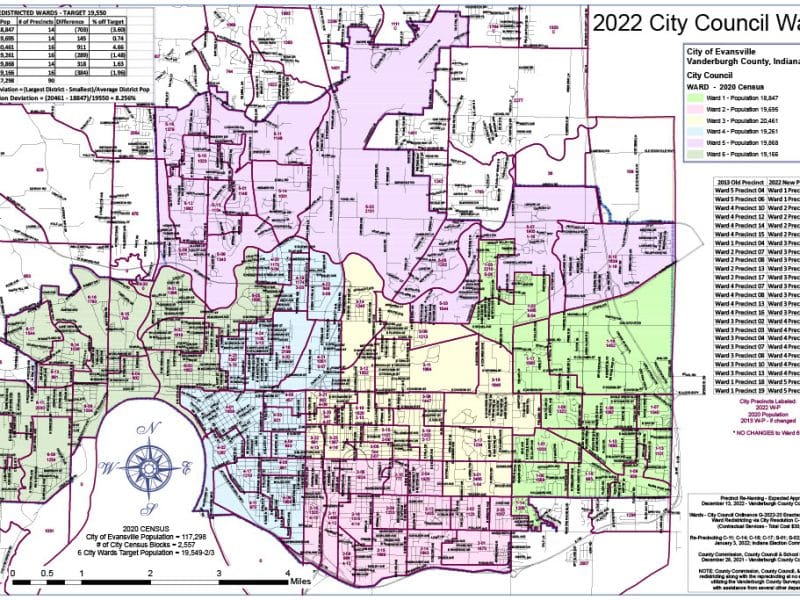
Those concerns are also influenced by ward boundary changes approved in 2022, which altered the Fourth Ward’s geographic and demographic makeup. The redrawn boundaries prompted renewed conversations among residents about political influence, representation, and whose voices are most reflected under the current maps.
The council member selected through the Jan. 10 caucus will assume responsibility for representing the Fourth Ward on issues ranging from neighborhood development and infrastructure to public safety and city services.
A follow-up story will be published after the caucus with details on the selected councilor and what comes next for the Fourth Ward. Residents are encouraged to visit Our Times Newspaper online for continued coverage.
Author
Related Articles
Our Times Newspaper Wins National Pitch Competition at LMA Journalism Funding Lab
Our Times Newspaper has won first place in the national Pitch Day competition for the 2025–2026 cohort of the LMA Lab for Journalism Funding. Our project, the Youth Media Lab, was selected by a panel of funder judges as the top presentation during the morning session, earning a $5,000 award to support the work.
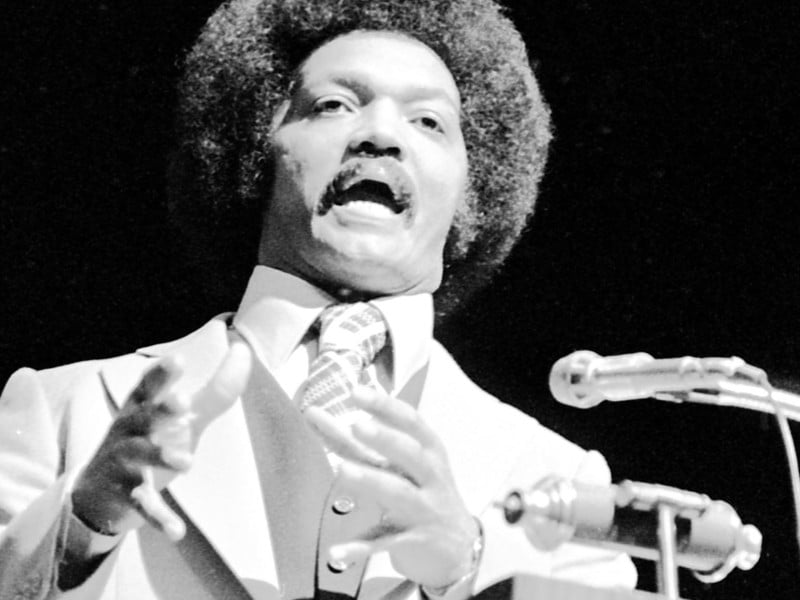
Keep Hope Alive: The Legacy That Lives Here
Rev. Jesse Jackson emerged as one of the most influential political voices of the late 20th century, helping reshape national politics through voter mobilization and coalition-building. In 1977 he visited Evansville. Community members shared their memories and the impact he had on their lives.