
Did you know your water bill is going up?
By Serita Cabell
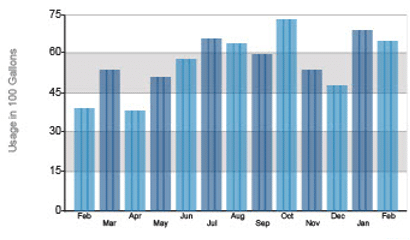
Spring has arrived, and it seems like another season of utility hikes is upon us. Amidst the attention drawn by Centerpointe’s increases, the Evansville Water Sewer and Utility (EWSU) raise snuck into effect on Monday. Customers should anticipate an approximate $3.10 rise in bills for an average usage of 5,000 gallons.
As per the EWSU website in 2021 the IURC approved the utility’s plan to increase water rates in phases over a five-year period, from 2022 through 2026. The rate increases are necessary to pay for the construction of a new water treatment facility to replace EWSU’s aging water plant. Part of the current Water Filtration Facility has been in operation for over 125 years and is nearing the end of its useful life. The plant has undergone 10 major expansions and improvements. Additional expansions are no longer economically feasible. In a March 22nd press release, EWSU Executive Director said, “The water filtration plant that we have today was built to sustain our city over 100 years ago and is insufficient for sustainably supporting the future needs of our community and our region.” He noted the filtration plant provides water to all of Vanderburgh County and surrounding areas in Posey, Gibson, and Warrick counties. “We need to act now to build the new water plant to set ourselves up for continued growth.”
While there is acknowledgment of the need to enhance our water system for safety and reliability, to prevent scenarios like the water crisis in Flint, MI, questions arise regarding the funding source. Consumers face escalating costs without proportional increases in resources to address these expenses. Wages, including the federal minimum wage at $7.25, remain stagnant. Despite notable cost of living adjustments (COLA) for Social Security and Disability wages, such as the 5.9% increase in 2021 and 8.7% in 2022, reminiscent of figures not seen since 1980 and 1981, concerns persist over the financial strain on households. These adjustments surpass those experienced during the Great Recession years of 2008 and 2009.
Businesses are also impacted by utility rate increases. The interconnected nature of utility rates can have a domino effect, potentially leading to increased prices across various sectors or even forcing some businesses to close.
As a housing developer, the organization that I work for (Memorial CDC) previously included water, sewer, and trash services into projects as an amenity, aiming to maintain housing affordability while ensuring project viability. However, recent years have seen significant increases in project costs, often exceeding initial projections by 10-20% or more, compared to anticipated increases of 3-5%, which aligns with typical inflation rates. Even with these increasing costs, it’s impractical to transfer them to consumers while aiming to offer the community affordable housing choices. As a housing developer dedicated to our mission, we bear the financial burden, but for others, it might not be feasible.
What steps should we take? While the solution may not be clear today, it will require collective efforts to improve our economy, ensuring that everyone can recover from the widespread increases we’re experiencing, while prioritizing sensibility. Vote for candidates who advocate for equitable and livable wages. Vote for those with the experience, expertise, and ethical commitment to advance projects that consider not only immediate profits but also the future and the well-being of the next generation.
Author

Related Articles
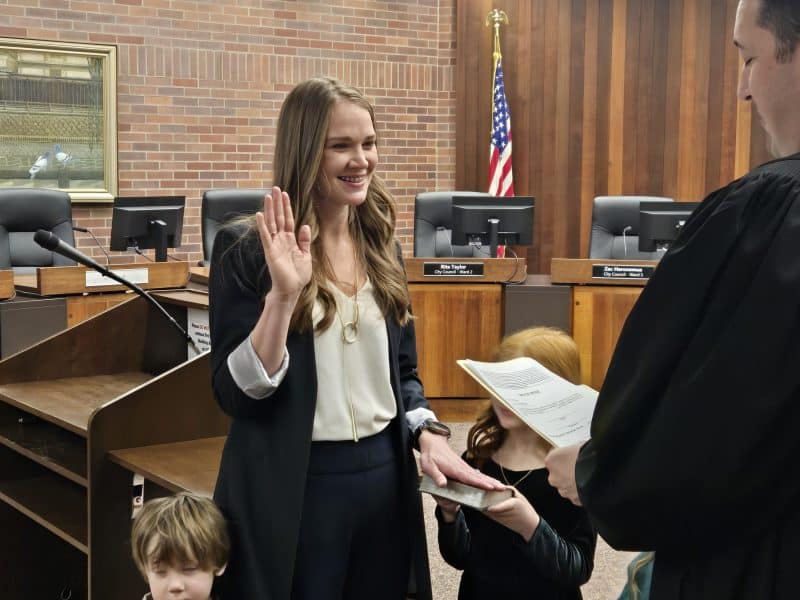
Kendra Hatfield begins term representing Evansville’s Fourth Ward
The Vanderburgh County Democratic Party selected Kendra Hatfield to serve as the new Evansville City Council representative for the Fourth Ward following a caucus held Saturday morning at party headquarters.


Beyond the Town Hall: Ted Brown’s Role in Expanding Disability Employment
Last September, the Indiana Statewide Independent Living Council (INSILC) hosted a disability town hall meeting where Ted Brown shared an inspiring story.